
Chinese character for king: 王 (wáng)
The Chinese character for king is 王 (wáng). It means king or ruler and appears in 国王 (guówáng, king) and 王子 (wángzǐ, prince). It is also one of the most common surnames, Wang.
How 王 is built
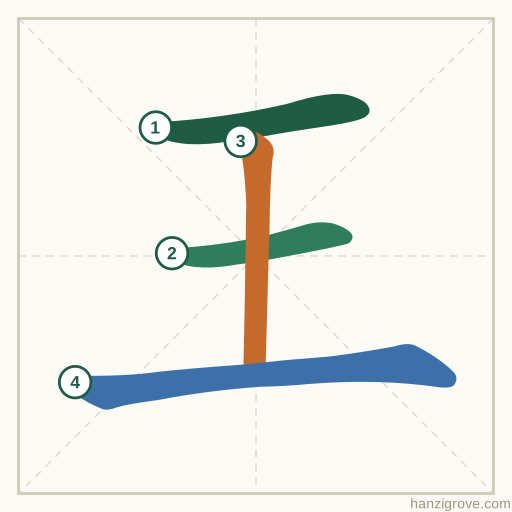
王 has three horizontal lines joined by a vertical stroke. Scholars trace it to an ancient picture of a ceremonial axe, the symbol of royal power. The traditional explanation, given as a memory aid, is that the three lines are heaven, humanity and earth, and the king is the one who connects them. As a part of other characters, 王 on the left usually stands for jade 玉. It is the same in both scripts.
王 wáng · king
- 一 — horizontal stroke
- 土tǔ — earth
- 十 — ten
- 一 — horizontal stroke
- 丨 — vertical stroke
- 一 — horizontal stroke
- 十 — ten
Origin hint: A man 十 bridging heaven and earth (both 一) (from the Make Me a Hanzi dataset; treat as a memory aid where history is uncertain)
How 王 is used
Other ways to say king
- 国王 guówáng — king of a country, everyday word
Before you use it as a tattoo or design: 王 is identical in both scripts but is also the very common surname Wang, so readers may see it as a name.
Questions
What is the Chinese character for king?
王 (wáng) means “king”.
How do you pronounce 王?
王 is pronounced wáng.