
Chinese character for pig: 猪 (zhū)
The Chinese character for pig is 猪 (zhū). It means pig and is the twelfth animal of the Chinese zodiac. It appears in 小猪 (xiǎozhū, piglet) and 猪年 (zhū nián, Year of the Pig).
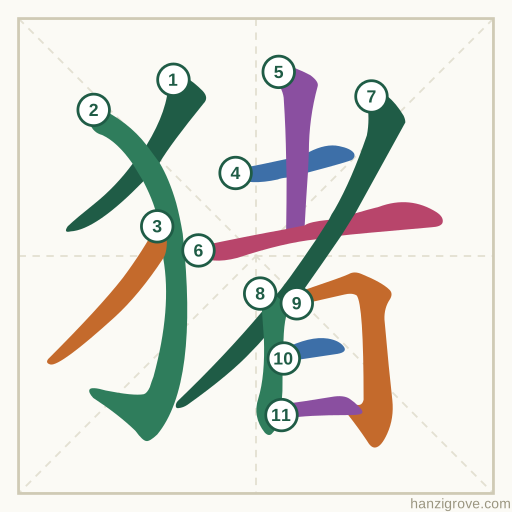
How 猪 is built
猪 joins 犭, the animal radical, with 者 (zhě), which gives the sound. The traditional form 豬 uses 豕 (shǐ), an older picture of a pig, instead of 犭. 豕 is the same part that sits under the roof in 家 (home, family), because pigs were kept by the house. In the zodiac the pig stands for generosity and good fortune.
猪 zhū · pig
- 犭quǎn — dog
- 者zhě — (after a verb or adjective) one who (is) ...
- 耂lǎo — old
- 土tǔ — earth
- 丿 — falling stroke
- 日rì — sun; day
- 口kǒu — mouth
- 一 — horizontal stroke
- 耂lǎo — old
Origin hint: 犭 gives the meaning, 者 gives the sound. (from the Make Me a Hanzi dataset; treat as a memory aid where history is uncertain)
How 猪 is used
Before you use it as a tattoo or design: 猪 can be used to tease someone as lazy or foolish, so a zodiac context like 猪年 is clearer for a tattoo.
Questions
What is the Chinese character for pig?
猪 (zhū) means “pig”. In traditional characters it is written 豬.
How do you pronounce 猪?
猪 is pronounced zhū.
Is 猪 simplified or traditional?
猪 is the simplified form used in mainland China and Singapore; 豬 is the traditional form used in Taiwan and Hong Kong.