
Chinese character for son: 儿子 (érzi)
The Chinese word for son is 儿子 (érzi). It is the everyday word for a son. 儿 means child and 子 means child or son.
How 儿子 is built
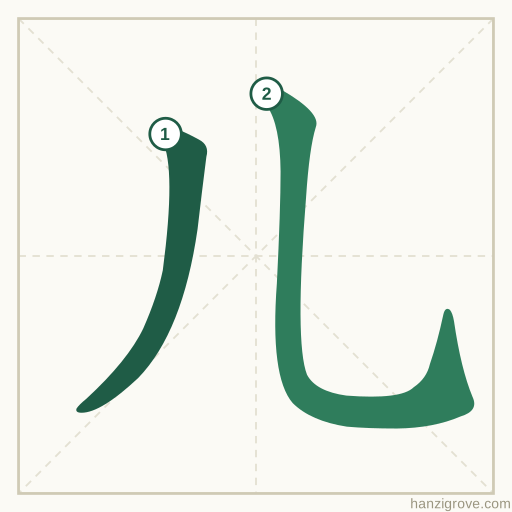
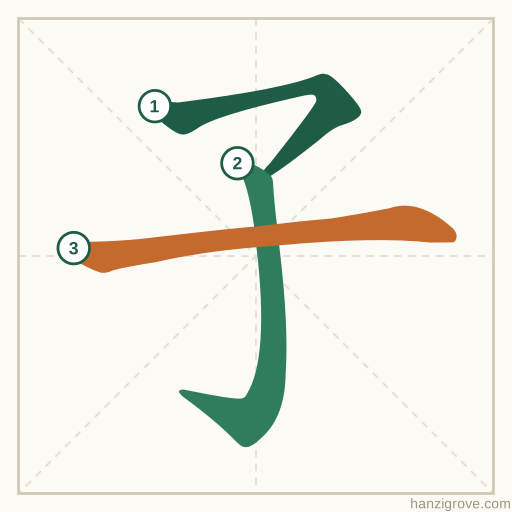
儿 (ér) is the simplified form of 兒, a pictograph of a small child with a large head and an open soft spot on top, standing on two legs. The simplified form keeps only the legs. 子 (zǐ) is a picture of a baby wrapped in cloth, arms out and legs bundled together. Together, 儿子 is a child, a son. The second syllable is said in a light tone, érzi.
儿 ér · child
- 丿 — falling stroke
- 乚 — hook stroke
Origin hint: Simplified form of 兒, a picture of a child; compare 人 (from the Make Me a Hanzi dataset; treat as a memory aid where history is uncertain)
子 zi · noun suffix
- 了liǎo / le — finish
- 乛 — bent stroke
- 亅 — hook
- 一 — horizontal stroke
Origin hint: A child in a wrap, with outstretched arms but bundled legs (from the Make Me a Hanzi dataset; treat as a memory aid where history is uncertain)
How 儿子 is used
Before you use it as a tattoo or design: Traditional 兒子 differs from simplified 儿子 in the first character; a son's Chinese name may be more personal than the word 'son'.
Questions
What is the Chinese character for son?
儿子 (érzi) means “son”. In traditional characters it is written 兒子.
How do you pronounce 儿子?
儿子 is pronounced érzi.
Is 儿子 simplified or traditional?
儿子 is the simplified form used in mainland China and Singapore; 兒子 is the traditional form used in Taiwan and Hong Kong.