
Chinese character for father: 父 (fù)
The Chinese character for father is 父 (fù). It means father and appears in 父亲 (fùqīn, father) and 父母 (fùmǔ, parents). In everyday speech, children call their father 爸爸 (bàba).
How 父 is built
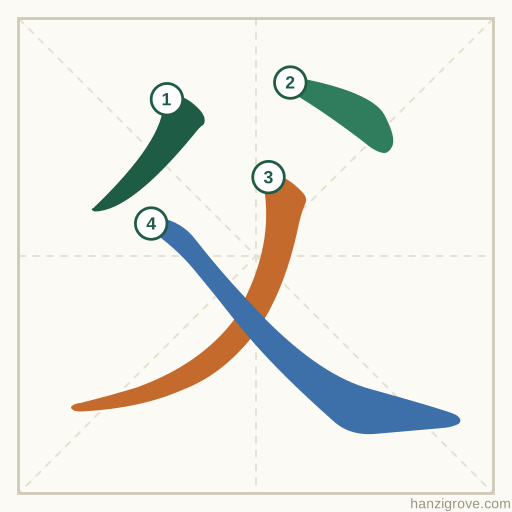
父 is explained as a hand holding a tool. In ancient forms you can see a hand gripping a stone axe or a stick, a picture of the head of the family who works and leads. As a memory aid, the crossing strokes at the bottom are the hand and the two dots above are the tool. 父 is also the top part of 爸 (dad). It is identical in simplified and traditional Chinese.
父 fù · father
- 八bā — eight
- 乂yì — crossed strokes
- 丿 — falling stroke
Origin hint: A hand 乂 holding an axe 八 (from the Make Me a Hanzi dataset; treat as a memory aid where history is uncertain)
How 父 is used
Other ways to say father
- 爸爸 bàba — dad; everyday word
- 父亲 fùqīn — father, respectful written word
Before you use it as a tattoo or design: 父亲 or 爸爸 reads more naturally than 父 alone for a tattoo honoring your father.
Questions
What is the Chinese character for father?
父 (fù) means “father”.
How do you pronounce 父?
父 is pronounced fù.