
Chinese character for soul: 灵魂 (línghún)
The Chinese word for soul is 灵魂 (línghún). It means the soul or spirit of a person, as in 灵魂伴侣 (línghún bànlǚ, soulmate). Both characters have to do with spirits.
How 灵魂 is built
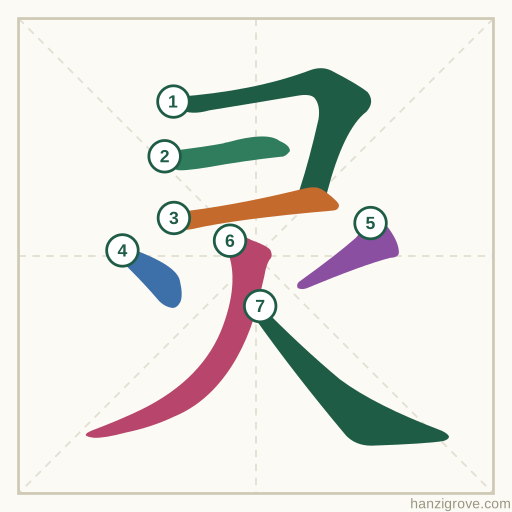
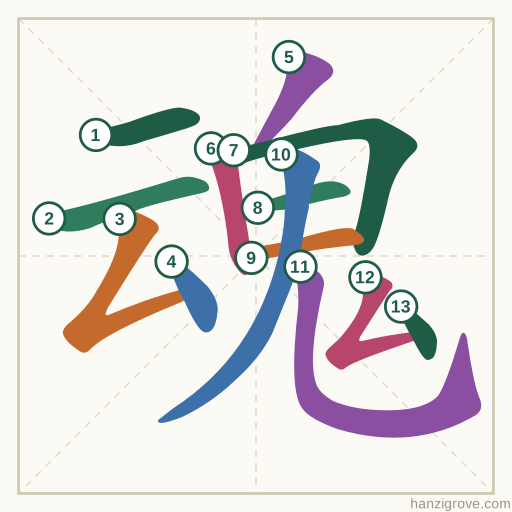
灵 (líng) in simplified form has a hand 彐 over 火 (fire). Its traditional form 靈 is very detailed: 雨 (rain) on top, three mouths 口, and 巫 (a shaman) below, showing prayers for rain, which links to spirits. 魂 (hún) joins 云 (yún), which gives the sound, with 鬼 (guǐ), a ghost or spirit. As a memory aid, 灵魂 is a spirit that drifts like a cloud.
灵 líng · spirit
- 彐jì — snout
- 二 — two strokes
- 一 — horizontal stroke
- 一 — horizontal stroke
- 二 — two strokes
- 火huǒ — fire
- 丷ha — kwukyel
- 丶 — dot
- 人rén — person
- 丷ha — kwukyel
魂 hún · soul
- 云yún — cloud
- 二 — two strokes
- 一 — horizontal stroke
- 一 — horizontal stroke
- 厶sī — private
- 二 — two strokes
- 鬼guǐ — ghost
- 乚 — hook stroke
- 厶sī — private
How 灵魂 is used
Other ways to say soul
- 魂 hún — soul, a single character
- 精神 jīngshén — spirit in the sense of mind and vigor
Before you use it as a tattoo or design: Traditional 靈魂 has many more strokes than 灵魂, so make sure it is large enough to stay readable on skin.
Questions
What is the Chinese character for soul?
灵魂 (línghún) means “soul”. In traditional characters it is written 靈魂.
How do you pronounce 灵魂?
灵魂 is pronounced línghún.
Is 灵魂 simplified or traditional?
灵魂 is the simplified form used in mainland China and Singapore; 靈魂 is the traditional form used in Taiwan and Hong Kong.