
Chinese character for death: 死 (sǐ)
The Chinese character for death is 死 (sǐ). It means to die or death, and appears in 死亡 (sǐwáng, death) and 生死 (shēngsǐ, life and death). It is a strong word, so Chinese speakers often use softer phrases about passing away.
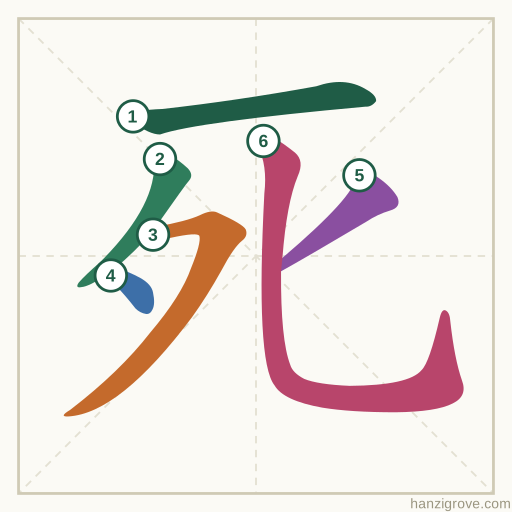
How 死 is built
死 has 歹 on the left, which shows bones or remains, and 匕 on the right, a person kneeling or bending. The standard explanation is a person mourning beside the remains of the dead. 歹 appears in other characters about death and harm. 死 is the same in simplified and traditional Chinese. The number four 四 (sì) sounds similar, which is why four is considered unlucky.
死 sǐ · to die
- 歹dǎi — corpse
- 一 — horizontal stroke
- 夕xī — evening
- 勹bāo — wrap shape
- 丶 — dot
- 匕bǐ — spoon
- 乚 — hook stroke
- 丿 — falling stroke
Origin hint: A person kneeling 匕 before a corpse 歹 (from the Make Me a Hanzi dataset; treat as a memory aid where history is uncertain)
How 死 is used
Other ways to say death
- 生死 shēngsǐ — life and death together, a more balanced phrase
Before you use it as a tattoo or design: 死 is an unlucky and confronting character to Chinese readers, so think carefully and consider 生死 (life and death) instead.
Questions
What is the Chinese character for death?
死 (sǐ) means “death”.
How do you pronounce 死?
死 is pronounced sǐ.