
Chinese character for truth: 真 (zhēn)
The Chinese character for truth is 真 (zhēn). It means true, real or genuine, and appears in 真理 (zhēnlǐ, truth) and 真心 (zhēnxīn, sincere heart). In speech, 真 also means 'really', as in 真好 (really good).
How 真 is built
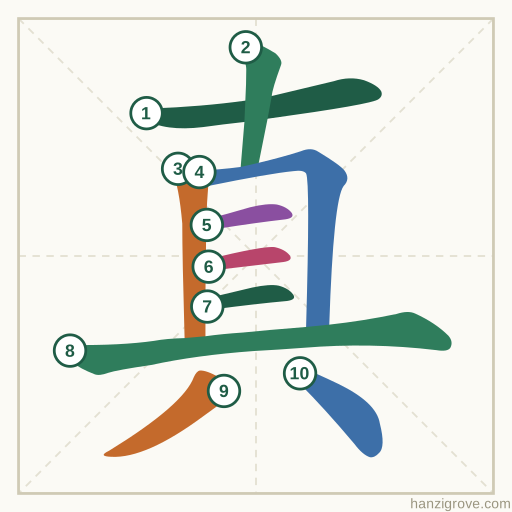
The origin of 真 is debated by scholars, so take this as a memory aid. Look for 十 (ten) on top, 目 (eye) in the middle, and a stand with two legs below. Picture ten eyes looking straight at something on a stand: when everyone sees the same thing, it is true. The upper part also resembles 直 (zhí, straight). 真 is identical in simplified and traditional Chinese.
真 zhēn · really
- 直zhí — straight
- 十 — ten
- 一 — horizontal stroke
- 丨 — vertical stroke
- 目mù — eye
- 口kǒu — mouth
- 二 — two strokes
- 一 — horizontal stroke
- 十 — ten
- 几jǐ — how many
- 丿 — falling stroke
- 乙yǐ — second
Origin hint: A straight 直 (that is, level) table 几 (from the Make Me a Hanzi dataset; treat as a memory aid where history is uncertain)
How 真 is used
Other ways to say truth
- 真理 zhēnlǐ — truth as a principle
- 真相 zhēnxiàng — the truth of a matter, the real facts
Before you use it as a tattoo or design: 真 alone often reads as 'real/really', so 真理 or 真心 may express your idea of truth more clearly.
Questions
What is the Chinese character for truth?
真 (zhēn) means “true”.
How do you pronounce 真?
真 is pronounced zhēn.