
Chinese character for honesty: 诚 (chéng)
The Chinese character for honesty is 诚 (chéng). It means honest and sincere, and appears in 诚实 (chéngshí, honest) and 真诚 (zhēnchéng, sincere). It describes someone whose words match their heart.
How 诚 is built
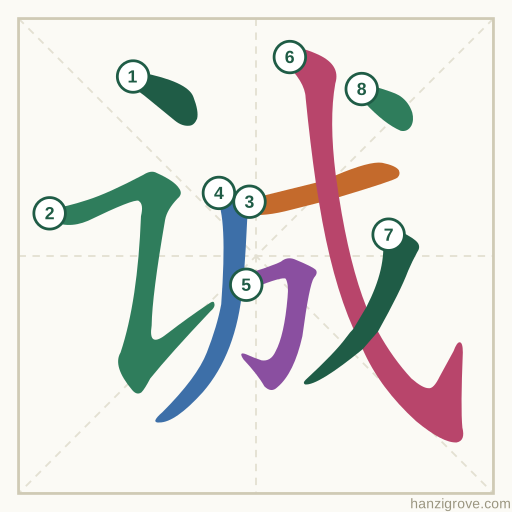
诚 joins the speech radical 讠 with 成 (chéng), which means to complete or accomplish and also gives the sound. In the traditional form 誠 the speech radical is written in full as 言. As a memory aid, honesty is speech that is complete: what you say is carried out. Sincerity was a key Confucian value, and 诚 is often paired with 信 (trust) in 诚信, integrity.
诚 chéng · honest
- 讠yán — speech
- 成chéng — to accomplish
- 丁dīng — male adult
- 戈gē — spear
Origin hint: 讠 gives the meaning, 成 gives the sound. (from the Make Me a Hanzi dataset; treat as a memory aid where history is uncertain)
How 诚 is used
Other ways to say honesty
- 诚实 chéngshí — honest, the everyday adjective
- 诚信 chéngxìn — integrity, honesty and trustworthiness
Before you use it as a tattoo or design: Choose 诚 or traditional 誠 and keep the speech radical consistent with that choice; 诚实 is the clearest everyday word.
Questions
What is the Chinese character for honesty?
诚 (chéng) means “honest”. In traditional characters it is written 誠.
How do you pronounce 诚?
诚 is pronounced chéng.
Is 诚 simplified or traditional?
诚 is the simplified form used in mainland China and Singapore; 誠 is the traditional form used in Taiwan and Hong Kong.