
Chinese character for blessing (good fortune): 福 (fú)
The Chinese character for blessing and good fortune is 福 (fú). It is one of the most popular characters in China, pasted on doors at Chinese New Year to welcome luck and happiness. It appears in 幸福 (xìngfú, happiness) and 祝福 (zhùfú, blessings).
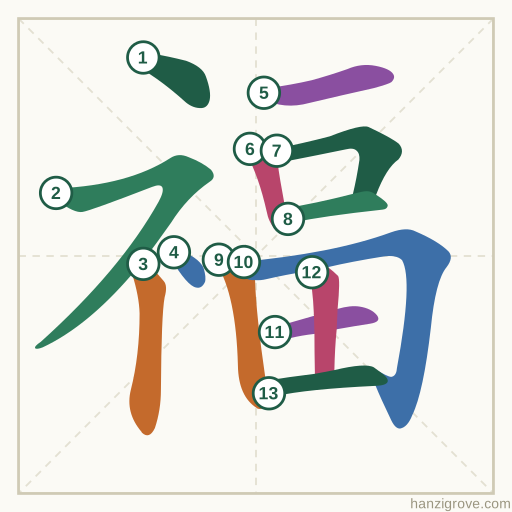
How 福 is built
福 has two parts. On the left is 礻, a short form of 示, which shows an altar and marks characters about blessings and rituals. On the right is 畐 (fú), a jar filled to the top, which also gives the sound. As a memory aid, a blessing is a full jar offered at the altar. At New Year, people often hang 福 upside down because 'upside down' (倒 dào) sounds like 'arrived' (到 dào): good fortune has arrived.
福 fú · good fortune
- 礻shì — spirit/altar
- 卜bo — divination
- 丨 — vertical stroke
- 丶 — dot
- 卜bo — divination
- 畐fú — to fill
- 一 — horizontal stroke
- 口kǒu — mouth
- 冂 — frame
- 一 — horizontal stroke
- 田tián — field
- 冂 — frame
- 土tǔ — earth
Origin hint: 礻 gives the meaning, 畐 gives the sound. (from the Make Me a Hanzi dataset; treat as a memory aid where history is uncertain)
How 福 is used
Other ways to say blessing (good fortune)
- 吉祥 jíxiáng — auspicious, lucky
- 运 yùn — luck or fortune that comes and goes
Before you use it as a tattoo or design: 福 is the same in simplified and traditional and is widely recognized; make sure the left radical is 礻 (with one dot), not 衤 (clothing).
Questions
What is the Chinese character for blessing (good fortune)?
福 (fú) means “good fortune”.
How do you pronounce 福?
福 is pronounced fú.