
啬
啬 (sè) · miserly
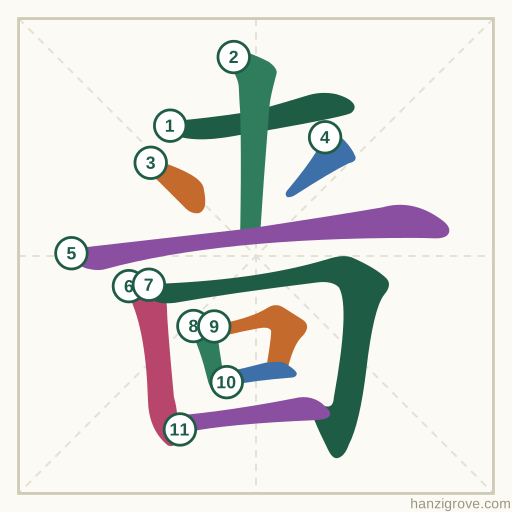
11 strokesTop–bottom
啬 (sè) means “miserly”. It is made of 土 + 丷 + 回 and has 11 strokes.
Break 啬 into its parts
What 啬 is made of
- 土 tǔ — earth
- 十 — ten
- 一 — horizontal stroke
- 丨 — vertical stroke
- 一 — horizontal stroke
- 十 — ten
- 丷 ha — kwukyel
- 丶 — dot
- 回 huí — to return
- 囗 wéi — enclosure
- 冂 — frame
- 一 — horizontal stroke
- 口 kǒu — mouth
- 冂 — frame
- 一 — horizontal stroke
- 囗 wéi — enclosure
啬 stroke order
Example sentences with 吝啬
他很有钱,但很吝啬。Tā hěn yǒuqián, dàn hěn lìnsè.He is rich but very stingy.
别那么吝啬,请大家喝杯茶吧。Bié nàme lìnsè, qǐng dàjiā hē bēi chá ba.Don't be so mean; buy everyone a cup of tea.
Words with 啬
Also built with ⿻
- 两liǎngtwo
- 乎hūinterrogative or exclamatory final particle
- 争zhēngto argue
- 亲qīnone's own (blood relation)
- 免miǎnto spare
- 制zhìsystem
- 奉fèngto offer
- 妻qīwife
- 展zhǎnto open
- 弟dìyoung brother
- 承chéngto undertake
- 更gèngmore
Quick facts
| Pinyin | sè |
|---|---|
| Meaning | miserly |
| Strokes | 11 |
| Pattern | Top–bottom |
Questions about 啬
What does 啬 mean?
啬 (sè) means “miserly”.
How many strokes does 啬 have?
啬 has 11 strokes.
What parts make up 啬?
啬 is made of 土 (earth) and 丷 (kwukyel) and 回 (to return).
Keep learning
Start with HSK 1 · Group 1: 10 words with quick checks and spaced repeats.