
亲
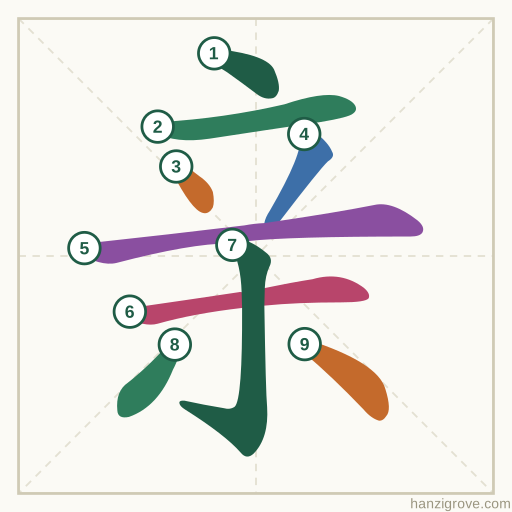
亲 (qīn) means “one's own (blood relation)”. It is made of 立 + 一 + 小 and has 9 strokes, and is an HSK 3 word in the 2021 standard.
Break 亲 into its parts
What 亲 is made of
- 立 lì — to stand
- 亠 tóu — lid
- 丶 — dot
- 一 — horizontal stroke
- 丷 ha — kwukyel
- 丶 — dot
- 一 — horizontal stroke
- 亠 tóu — lid
- 一 — horizontal stroke
- 小 xiǎo — small
- 亅 — hook
- 八 bā — eight
Origin hint: A tree 木 bearing fruit 立 (from the Make Me a Hanzi dataset; treat as a memory aid where history is uncertain)
亲 stroke order
Example sentences
他是我的亲哥哥。Tā shì wǒ de qīn gēge.He is my own older brother.
这是我亲手做的蛋糕。Zhè shì wǒ qīn shǒu zuò de dàngāo.This is a cake I made with my own hands.
Words with 亲
- 父亲fùqīnfather
- 母亲mǔqīnmother
- 亲切qīnqièkind
- 亲人qīnrénfamily members
- 亲自qīnzìpersonally
- 亲爱qīnàidear
- 亲密qīnmìclose
- 亲戚qīnqirelative
- 亲热qīnrèaffectionate
Also built with 立
- 位wèimeasure word for people (polite)
- 垃lāgarbage
- 帝dìsupreme ruler
- 拉lāto pull
- 旁pángside
- 泣qìto cry
- 竖shùto stand upright
- 站zhànstation
- 竞jìngto compete
- 童tóngchild
- 竭jiéto exhaust
- 端duānto carry (level with both hands)
Quick facts
| Pinyin | qīn |
|---|---|
| Meaning | one's own (blood relation); dear; to kiss |
| Strokes | 9 |
| Radical | 立 (stand, #117) |
| Pattern | Top–bottom |
| HSK | HSK 3 (2021) |
Questions about 亲
What does 亲 mean?
亲 (qīn) means “one's own (blood relation); dear; to kiss”.
How many strokes does 亲 have?
亲 has 9 strokes.
What is the radical of 亲?
The radical of 亲 is 立 (lì, “stand”), Kangxi radical number 117.
What parts make up 亲?
亲 is made of 立 (to stand) and 一 (horizontal stroke) and 小 (small).
Which HSK level is 亲?
亲 is in HSK 3 (2021).
Learn 亲 with its group
It is part of HSK 3 (2021) · Group 71: a short group with quick checks and spaced repeats.