
律
律 (lǜ) · statute
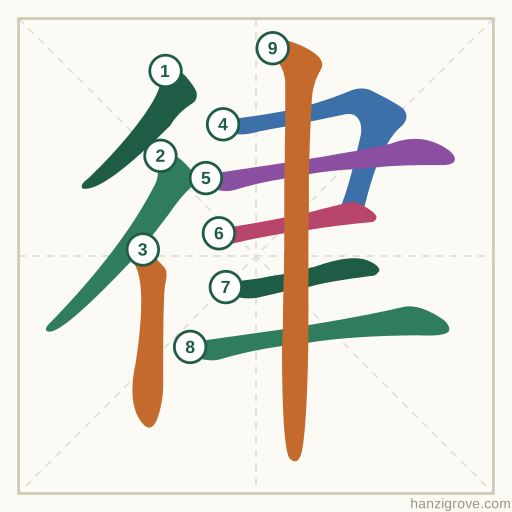
律 (lǜ) means “statute”. It is made of 彳 + 聿 and has 9 strokes.
Break 律 into its parts
What 律 is made of
- 彳 chì — to step with the left foot
- 丨 — vertical stroke
- 聿 yù — writing brush
- 肀 yù — pen
- 彐 jì — snout
- 丨 — vertical stroke
- 肀 yù — pen
Origin hint: To walk 彳 as required by law 聿 (from the Make Me a Hanzi dataset; treat as a memory aid where history is uncertain)
律 stroke order
Example sentences with 法律
他在大学学习法律。Tā zài dàxué xuéxí fǎlǜ.He studies law at university.
每个人都应该了解法律。Měi ge rén dōu yīnggāi liǎojiě fǎlǜ.Everyone should know about the law.
Words with 律
Also built with 彳
- 役yìservant
- 彻chèpenetrating
- 彼bǐthat
- 往wǎngtowards
- 征zhēngto summon
- 径jìngpath
- 待dāito stay
- 很hěnvery
- 徊huáito linger
- 徒túdisciple
- 得déto get
- 徘páito dither
Quick facts
| Pinyin | lǜ |
|---|---|
| Meaning | statute |
| Strokes | 9 |
| Radical | 彳 (step, #60) |
| Pattern | Left–right |
Questions about 律
What does 律 mean?
律 (lǜ) means “statute”.
How many strokes does 律 have?
律 has 9 strokes.
What is the radical of 律?
The radical of 律 is 彳 (chì, “step”), Kangxi radical number 60.
What parts make up 律?
律 is made of 彳 (to step with the left foot) and 聿 (writing brush).
Keep learning
Start with HSK 1 · Group 1: 10 words with quick checks and spaced repeats.