
得
得 (dé) means “to get”. It is made of 彳 + 旦 + 寸 and has 11 strokes, and is an HSK 3 word in the current exam syllabus (2025).
Break 得 into its parts
What 得 is made of
- 彳 chì — to step with the left foot
- 丨 — vertical stroke
- 旦 dàn — dawn
- 日 rì — sun; day
- 口 kǒu — mouth
- 一 — horizontal stroke
- 一 — horizontal stroke
- 日 rì — sun; day
- 寸 cùn — inch
Origin hint: A hand 寸 grabbing a shell 旦 (from the Make Me a Hanzi dataset; treat as a memory aid where history is uncertain)
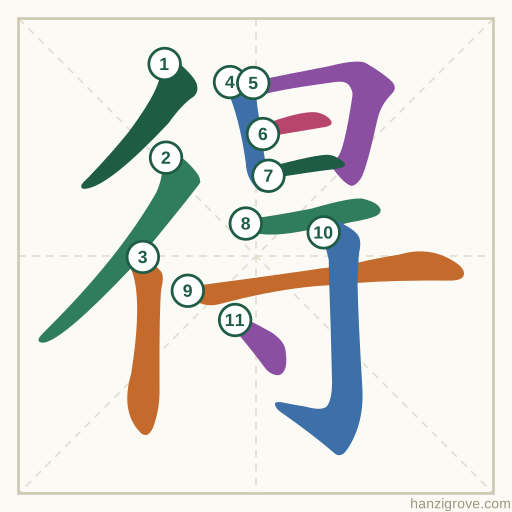
得 stroke order
Example sentences
他得了第一名。Tā dé le dì yī míng.He got first place.
你这次考试得了多少分?Nǐ zhè cì kǎoshì dé le duōshao fēn?What score did you get on this exam?
Words with 得
- 得到dédàoto get
- 记得jìdeto remember
- 觉得juédeto feel
- 得出déchūto reach (a result)
- 懂得dǒngdeto understand
- 取得qǔdéto get
- 不得不bùdébùto have to
- 得分défēnto score
- 认得rèndeto know
- 显得xiǎndeto seem
- 值得zhídeto be worth
- 得意déyìpleased with oneself
- 获得huòdéto obtain
- 来得及láidejíthere's still time
- 赢得yíngdéto win
- 不得了bùdéliǎoextremely
- 不见得bùjiàndenot necessarily
- 怪不得guàibudeno wonder
- 舍不得shěbudeto hate to part with
- 巴不得bābudeto be eager to
- 不得已bùdéyǐto have no choice
- 不由得bùyóudecan't help (doing)
- 得不偿失débùchángshīthe gains don't make up for the losses
- 得力délìcapable
- 得天独厚détiāndúhòurichly endowed by nature
- 得罪dézuìto offend
- 恨不得hènbudeto be itching to
- 免得miǎndeso as not to
- 难得nándérare
- 心得xīndéwhat one has learned
- 一举两得yījǔliǎngdéto kill two birds with one stone
Also built with 彳
- 役yìservant
- 彻chèpenetrating
- 彼bǐthat
- 往wǎngtowards
- 征zhēngto summon
- 径jìngpath
- 待dāito stay
- 很hěnvery
- 徊huáito linger
- 律lǜstatute
- 徒túdisciple
- 徘páito dither
Quick facts
| Pinyin | dé |
|---|---|
| Meaning | to get; to obtain |
| Strokes | 11 |
| Radical | 彳 (step, #60) |
| Pattern | Left–right |
| HSK | HSK 3 (exam 2025) · HSK 2 (2021) |
Questions about 得
What does 得 mean?
得 (dé) means “to get; to obtain”.
How many strokes does 得 have?
得 has 11 strokes.
What is the radical of 得?
The radical of 得 is 彳 (chì, “step”), Kangxi radical number 60.
What parts make up 得?
得 is made of 彳 (to step with the left foot) and 旦 (dawn) and 寸 (inch).
Which HSK level is 得?
得 is in HSK 3 (exam 2025) and HSK 2 (2021).
Learn 得 with its group
It is part of HSK 2 (2021) · Group 37: a short group with quick checks and spaced repeats.