
抒
抒 (shū) · to express
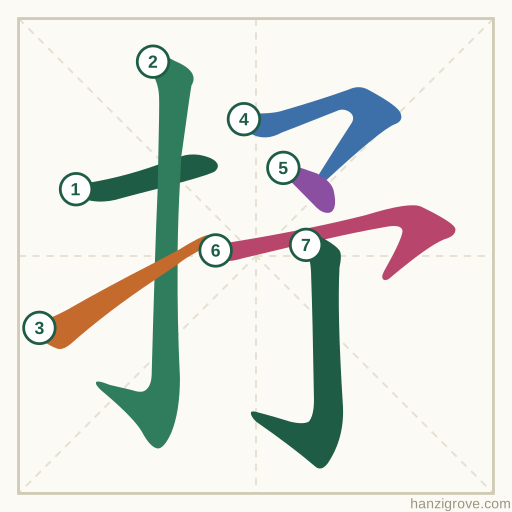
7 strokesLeft–right
抒 (shū) means “to express”. It is made of 扌 + 予 and has 7 strokes.
Break 抒 into its parts
What 抒 is made of
- 扌 shǒu — hand
- 二 — two strokes
- 一 — horizontal stroke
- 一 — horizontal stroke
- 亅 — hook
- 二 — two strokes
- 予 yǔ — to give
- 丁 dīng — male adult
抒 stroke order
Example sentences with 各抒己见
会上大家各抒己见。Huìshàng dàjiā gèshūjǐjiàn.At the meeting everyone gave their own views.
老师鼓励学生们各抒己见。Lǎoshī gǔlì xuéshēngmen gèshūjǐjiàn.The teacher encouraged the students to share their own opinions.
Words with 抒
Also built with 扌
- 举jǔto raise
- 我wǒI
- 才cáitalent
- 扎zhāto prick
- 扑pūto pounce on
- 扒bāto hold on to
- 打dǎto play (ball)
- 扔rēngto throw
- 托tuōto raise
- 扛kángto carry on the shoulder
- 扣kòuto fasten
- 执zhíto execute
Quick facts
| Pinyin | shū |
|---|---|
| Meaning | to express |
| Strokes | 7 |
| Pattern | Left–right |
Questions about 抒
What does 抒 mean?
抒 (shū) means “to express”.
How many strokes does 抒 have?
抒 has 7 strokes.
What parts make up 抒?
抒 is made of 扌 (hand) and 予 (to give).
Keep learning
Start with HSK 1 · Group 1: 10 words with quick checks and spaced repeats.