
挨
挨 (āi) means “to be next to”. It is made of 扌 + 矣 and has 10 strokes, and is an old HSK 6 word (HSK 2.0).
Break 挨 into its parts
What 挨 is made of
- 扌 shǒu — hand
- 二 — two strokes
- 一 — horizontal stroke
- 一 — horizontal stroke
- 亅 — hook
- 二 — two strokes
- 矣 yǐ — particle of completed action
- 厶 sī — private
- 矢 shǐ — arrow
- 丿 — falling stroke
- 天 tiān — sky
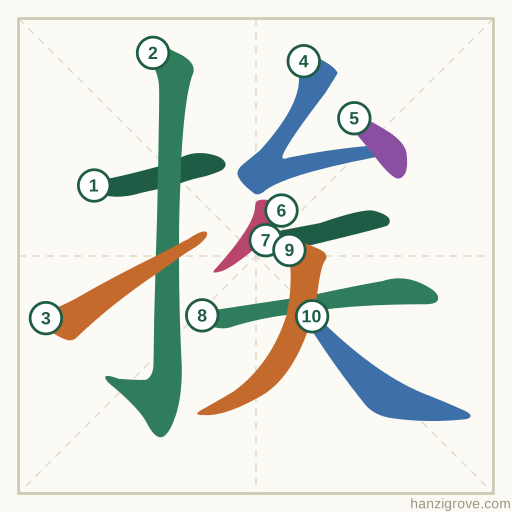
挨 stroke order
Example sentences
我的座位挨着窗户。Wǒ de zuòwèi āi zhe chuānghu.My seat is next to the window.
医生挨个检查病人。Yīshēng āi gè jiǎnchá bìngrén.The doctor examined the patients one by one.
Also built with 扌
- 举jǔto raise
- 我wǒI
- 才cáitalent
- 扎zhāto prick
- 扑pūto pounce on
- 扒bāto hold on to
- 打dǎto play (ball)
- 扔rēngto throw
- 托tuōto raise
- 扛kángto carry on the shoulder
- 扣kòuto fasten
- 执zhíto execute
Quick facts
| Pinyin | āi |
|---|---|
| Meaning | to be next to; to get close to; one by one |
| Strokes | 10 |
| Pattern | Left–right |
| HSK | Old HSK 6 |
Questions about 挨
What does 挨 mean?
挨 (āi) means “to be next to; to get close to; one by one”.
How many strokes does 挨 have?
挨 has 10 strokes.
What parts make up 挨?
挨 is made of 扌 (hand) and 矣 (particle of completed action).
Which HSK level is 挨?
挨 is in Old HSK 6.
Learn 挨 with its group
It is part of Old HSK 6 · Group 1: a short group with quick checks and spaced repeats.