
捏
捏 (niē) means “to pinch”. It is made of 扌 + 圼 and has 10 strokes, and is an old HSK 6 word (HSK 2.0).
Break 捏 into its parts
What 捏 is made of
- 扌 shǒu — hand
- 二 — two strokes
- 一 — horizontal stroke
- 一 — horizontal stroke
- 亅 — hook
- 二 — two strokes
- 圼 niè — slime
- 日 rì — sun; day
- 口 kǒu — mouth
- 一 — horizontal stroke
- 土 tǔ — earth
- 十 — ten
- 一 — horizontal stroke
- 日 rì — sun; day
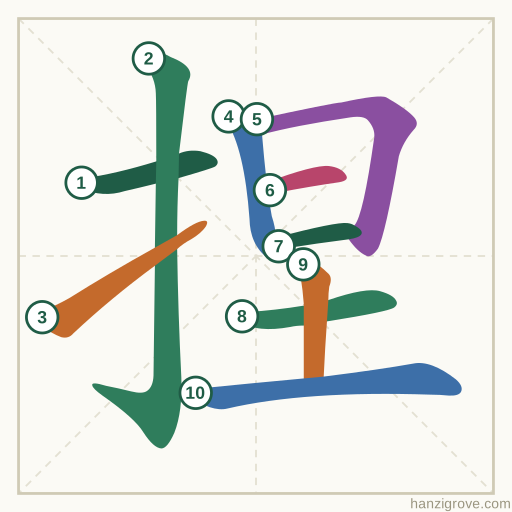
捏 stroke order
Example sentences
他轻轻捏了一下孩子的脸。Tā qīngqīng niē le yíxià háizi de liǎn.He gently pinched the child's cheek.
孩子们在用泥捏小动物。Háizimen zài yòng ní niē xiǎo dòngwù.The children are molding little animals out of clay.
Also built with 扌
- 举jǔto raise
- 我wǒI
- 才cáitalent
- 扎zhāto prick
- 扑pūto pounce on
- 扒bāto hold on to
- 打dǎto play (ball)
- 扔rēngto throw
- 托tuōto raise
- 扛kángto carry on the shoulder
- 扣kòuto fasten
- 执zhíto execute
Quick facts
| Pinyin | niē |
|---|---|
| Meaning | to pinch; to hold between fingers; to mold |
| Strokes | 10 |
| Pattern | Left–right |
| HSK | Old HSK 6 |
Questions about 捏
What does 捏 mean?
捏 (niē) means “to pinch; to hold between fingers; to mold”.
How many strokes does 捏 have?
捏 has 10 strokes.
What parts make up 捏?
捏 is made of 扌 (hand) and 圼 (slime).
Which HSK level is 捏?
捏 is in Old HSK 6.
Learn 捏 with its group
It is part of Old HSK 6 · Group 131: a short group with quick checks and spaced repeats.