
搀
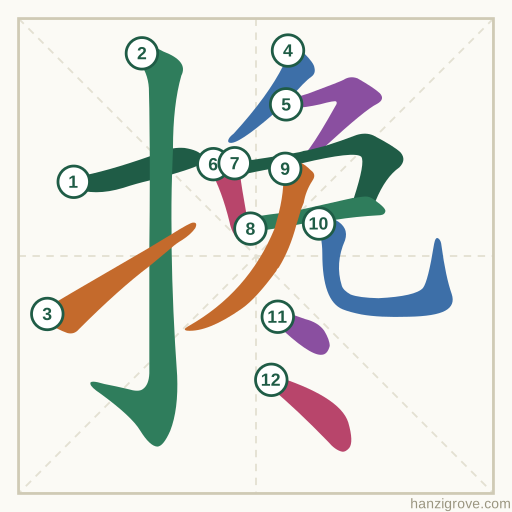
搀 (chān) means “to help by the arm”. It is made of 扌 + 免 + ⺀ and has 12 strokes, and is an old HSK 6 word (HSK 2.0).
Break 搀 into its parts
What 搀 is made of
- 扌 shǒu — hand
- 二 — two strokes
- 一 — horizontal stroke
- 一 — horizontal stroke
- 亅 — hook
- 二 — two strokes
- 免 miǎn — to spare
- ⺈ — top shape
- 口 kǒu — mouth
- 冂 — frame
- 一 — horizontal stroke
- 儿 ér — child
- 丿 — falling stroke
- 乚 — hook stroke
- ⺀ — ice
搀 stroke order
Example sentences
他搀着爷爷慢慢走。Tā chān zhe yéye mànmàn zǒu.He helped Grandpa walk slowly by the arm.
护士搀着病人下了床。Hùshì chān zhe bìngrén xià le chuáng.The nurse helped the patient out of bed.
Also built with 扌
- 举jǔto raise
- 我wǒI
- 才cáitalent
- 扎zhāto prick
- 扑pūto pounce on
- 扒bāto hold on to
- 打dǎto play (ball)
- 扔rēngto throw
- 托tuōto raise
- 扛kángto carry on the shoulder
- 扣kòuto fasten
- 执zhíto execute
Quick facts
| Pinyin | chān |
|---|---|
| Meaning | to help by the arm; to support |
| Strokes | 12 |
| Pattern | Left–right |
| HSK | Old HSK 6 |
Questions about 搀
What does 搀 mean?
搀 (chān) means “to help by the arm; to support”.
How many strokes does 搀 have?
搀 has 12 strokes.
What parts make up 搀?
搀 is made of 扌 (hand) and 免 (to spare) and ⺀ (ice).
Which HSK level is 搀?
搀 is in Old HSK 6.
Learn 搀 with its group
It is part of Old HSK 6 · Group 22: a short group with quick checks and spaced repeats.