
搁
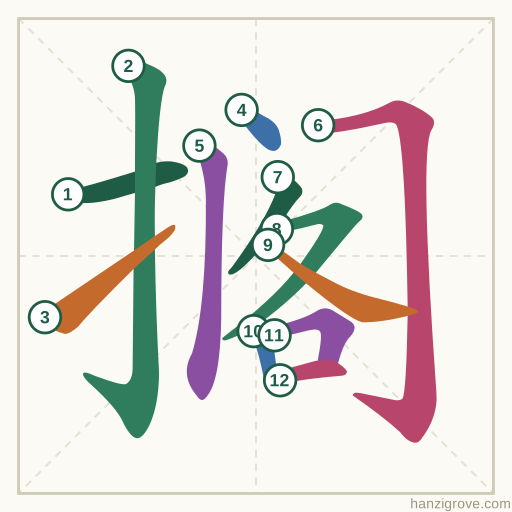
搁 (gē) means “to put”. It is made of 扌 + 阁 and has 12 strokes, and is an old HSK 6 word (HSK 2.0).
Break 搁 into its parts
What 搁 is made of
- 扌 shǒu — hand
- 二 — two strokes
- 一 — horizontal stroke
- 一 — horizontal stroke
- 亅 — hook
- 二 — two strokes
- 阁 gé — cabinet
- 门 mén — gate
- 丶 — dot
- 丨 — vertical stroke
- 各 gè — individual
- 夂 zhǐ — to go
- 口 kǒu — mouth
- 门 mén — gate
搁 stroke order
Example sentences
把书搁在桌子上吧。Bǎ shū gē zài zhuōzi shàng ba.Just put the book on the table.
这件事先搁一搁,明天再说。Zhè jiàn shì xiān gē yi gē, míngtiān zài shuō.Let's put this aside for now and talk about it tomorrow.
Also built with 扌
- 举jǔto raise
- 我wǒI
- 才cáitalent
- 扎zhāto prick
- 扑pūto pounce on
- 扒bāto hold on to
- 打dǎto play (ball)
- 扔rēngto throw
- 托tuōto raise
- 扛kángto carry on the shoulder
- 扣kòuto fasten
- 执zhíto execute
Quick facts
| Pinyin | gē |
|---|---|
| Meaning | to put; to leave; to put aside |
| Strokes | 12 |
| Pattern | Left–right |
| HSK | Old HSK 6 |
Questions about 搁
What does 搁 mean?
搁 (gē) means “to put; to leave; to put aside”.
How many strokes does 搁 have?
搁 has 12 strokes.
What parts make up 搁?
搁 is made of 扌 (hand) and 阁 (cabinet).
Which HSK level is 搁?
搁 is in Old HSK 6.
Learn 搁 with its group
It is part of Old HSK 6 · Group 64: a short group with quick checks and spaced repeats.