
搞
搞 (gǎo) means “to do”. It is made of 扌 + 高 and has 13 strokes, and is an old HSK 5 word (HSK 2.0).
Break 搞 into its parts
What 搞 is made of
- 扌 shǒu — hand
- 二 — two strokes
- 一 — horizontal stroke
- 一 — horizontal stroke
- 亅 — hook
- 二 — two strokes
- 高 gāo — tall
- 亠 tóu — lid
- 丶 — dot
- 一 — horizontal stroke
- 口 kǒu — mouth
- 冂 — frame
- 一 — horizontal stroke
- 冋 jiōng — desert
- 冂 — frame
- 口 kǒu — mouth
- 亠 tóu — lid
搞 stroke order
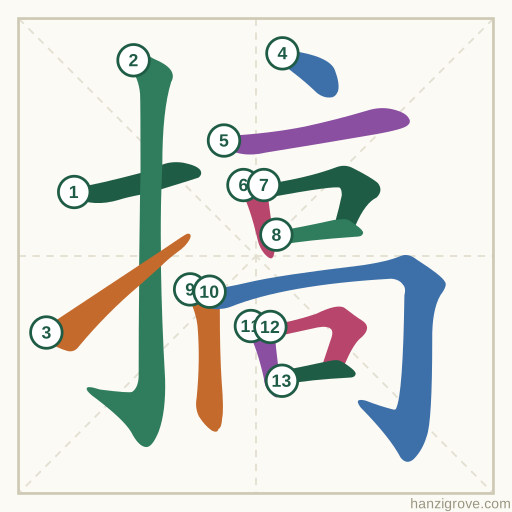
Example sentences
你们在搞什么活动?Nǐmen zài gǎo shénme huódòng?What event are you organizing?
他把事情搞清楚了。Tā bǎ shìqing gǎo qīngchu le.He got the matter sorted out.
Also built with 扌
- 举jǔto raise
- 我wǒI
- 才cáitalent
- 扎zhāto prick
- 扑pūto pounce on
- 扒bāto hold on to
- 打dǎto play (ball)
- 扔rēngto throw
- 托tuōto raise
- 扛kángto carry on the shoulder
- 扣kòuto fasten
- 执zhíto execute
Quick facts
| Pinyin | gǎo |
|---|---|
| Meaning | to do; to make; to work on |
| Strokes | 13 |
| Pattern | Left–right |
| HSK | Old HSK 5 |
Questions about 搞
What does 搞 mean?
搞 (gǎo) means “to do; to make; to work on”.
How many strokes does 搞 have?
搞 has 13 strokes.
What parts make up 搞?
搞 is made of 扌 (hand) and 高 (tall).
Which HSK level is 搞?
搞 is in Old HSK 5.
Learn 搞 with its group
It is part of Old HSK 5 · Group 32: a short group with quick checks and spaced repeats.