
攒
攒 (zǎn) means “to save up”. It is made of 扌 + 赞 and has 19 strokes, and is an old HSK 6 word (HSK 2.0).
Break 攒 into its parts
What 攒 is made of
- 扌 shǒu — hand
- 二 — two strokes
- 一 — horizontal stroke
- 一 — horizontal stroke
- 亅 — hook
- 二 — two strokes
- 赞 zàn — to help
- 兟 shēn — to advance
- 先 xiān — first
- 先 xiān — first
- 贝 bèi — sea shell
- 冂 — frame
- 人 rén — person
- 兟 shēn — to advance
攒 stroke order
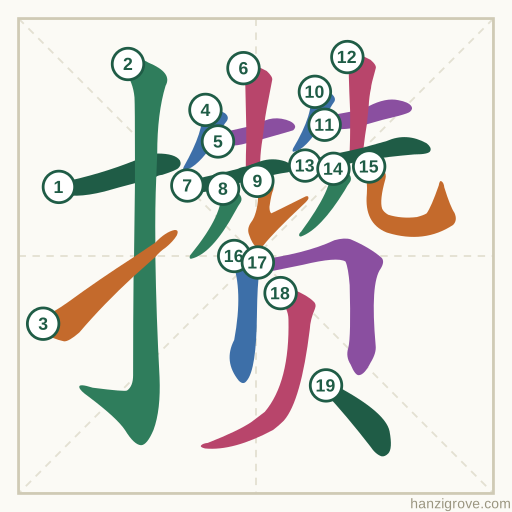
Example sentences
他攒了一年的钱买电脑。Tā zǎn le yīnián de qián mǎi diànnǎo.He saved up for a year to buy a computer.
我想攒点儿钱去旅行。Wǒ xiǎng zǎn diǎnr qián qù lǚxíng.I want to save up some money to travel.
Also built with 扌
- 举jǔto raise
- 我wǒI
- 才cáitalent
- 扎zhāto prick
- 扑pūto pounce on
- 扒bāto hold on to
- 打dǎto play (ball)
- 扔rēngto throw
- 托tuōto raise
- 扛kángto carry on the shoulder
- 扣kòuto fasten
- 执zhíto execute
Quick facts
| Pinyin | zǎn |
|---|---|
| Meaning | to save up; to accumulate |
| Strokes | 19 |
| Pattern | Left–right |
| HSK | Old HSK 6 |
Questions about 攒
What does 攒 mean?
攒 (zǎn) means “to save up; to accumulate”.
How many strokes does 攒 have?
攒 has 19 strokes.
What parts make up 攒?
攒 is made of 扌 (hand) and 赞 (to help).
Which HSK level is 攒?
攒 is in Old HSK 6.
Learn 攒 with its group
It is part of Old HSK 6 · Group 225: a short group with quick checks and spaced repeats.