
梯
梯 (tī) · ladder
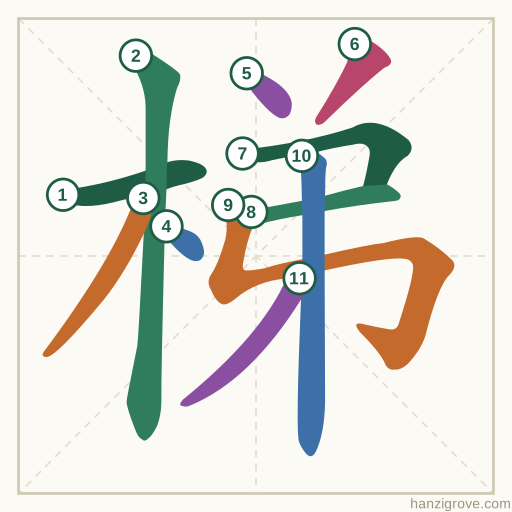
梯 (tī) means “ladder”. It is made of 木 + 弟 and has 11 strokes.
Break 梯 into its parts
What 梯 is made of
- 木 mù — tree
- 十 — ten
- 一 — horizontal stroke
- 丨 — vertical stroke
- 八 bā — eight
- 十 — ten
- 弟 dì — young brother
- 丷 ha — kwukyel
- 丶 — dot
- 弓 gōng — bow
- 丷 ha — kwukyel
Origin hint: 木 gives the meaning, 弟 gives the sound. (from the Make Me a Hanzi dataset; treat as a memory aid where history is uncertain)
梯 stroke order
Example sentences with 电梯
我们坐电梯上去吧。Wǒmen zuò diàntī shàngqù ba.Let's take the elevator up.
请问,电梯在哪儿?Qǐngwèn, diàntī zài nǎr?Excuse me, where is the elevator?
Words with 梯
Also built with 木
- 休xiūrest
- 呆dāidull
- 困kùnsleepy
- 床chuángbed
- 未wèinot yet
- 末mòend
- 本běnmeasure word for books
- 术shùskill
- 朴pǔplain
- 朵duǒmeasure word for flowers and clouds
- 机jīmachine
- 朽xiǔdecayed
Quick facts
| Pinyin | tī |
|---|---|
| Meaning | ladder |
| Strokes | 11 |
| Radical | 木 (tree, #75) |
| Pattern | Left–right |
Questions about 梯
What does 梯 mean?
梯 (tī) means “ladder”.
How many strokes does 梯 have?
梯 has 11 strokes.
What is the radical of 梯?
The radical of 梯 is 木 (mù, “tree”), Kangxi radical number 75.
What parts make up 梯?
梯 is made of 木 (tree) and 弟 (young brother).
Keep learning
Start with HSK 1 · Group 1: 10 words with quick checks and spaced repeats.