
秤
秤 (chèng) means “scale (for weighing)”. It is made of 禾 + 平 and has 10 strokes, and is an old HSK 6 word (HSK 2.0).
Break 秤 into its parts
What 秤 is made of
- 禾 hé — cereal
- 丿 — falling stroke
- 木 mù — tree
- 十 — ten
- 八 bā — eight
- 平 píng — flat
- 干 gàn — dry (gān)
- 一 — horizontal stroke
- 十 — ten
- 丷 ha — kwukyel
- 丶 — dot
- 干 gàn — dry (gān)
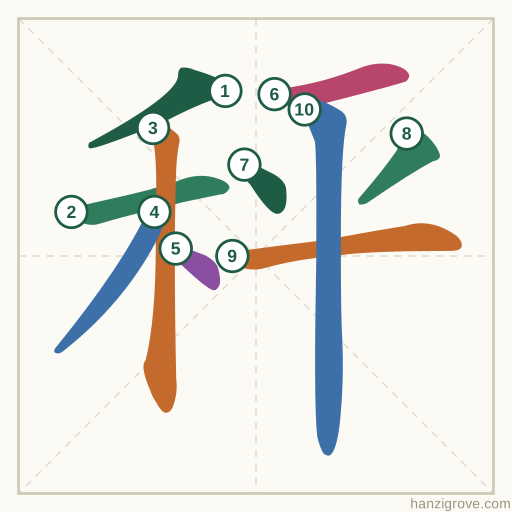
秤 stroke order
Example sentences
用秤称一下这些苹果。Yòng chèng chēng yíxià zhèxiē píngguǒ.Weigh these apples on the scale.
这个秤不太准。Zhège chèng bù tài zhǔn.This scale isn't very accurate.
Also built with 禾
- 乘chéngto ride (a vehicle)
- 利lìgains
- 和héand
- 委wěito appoint
- 季jìseason
- 秀xiùelegant
- 私sīpersonal
- 秃tūbald
- 秋qiūautumn
- 种zhǒngkind
- 科kēsubject
- 秒miǎosecond (of time)
Quick facts
| Pinyin | chèng |
|---|---|
| Meaning | scale (for weighing) |
| Strokes | 10 |
| Pattern | Left–right |
| HSK | Old HSK 6 |
Questions about 秤
What does 秤 mean?
秤 (chèng) means “scale (for weighing)”.
How many strokes does 秤 have?
秤 has 10 strokes.
What parts make up 秤?
秤 is made of 禾 (cereal) and 平 (flat).
Which HSK level is 秤?
秤 is in Old HSK 6.
Learn 秤 with its group
It is part of Old HSK 6 · Group 28: a short group with quick checks and spaced repeats.