
穿
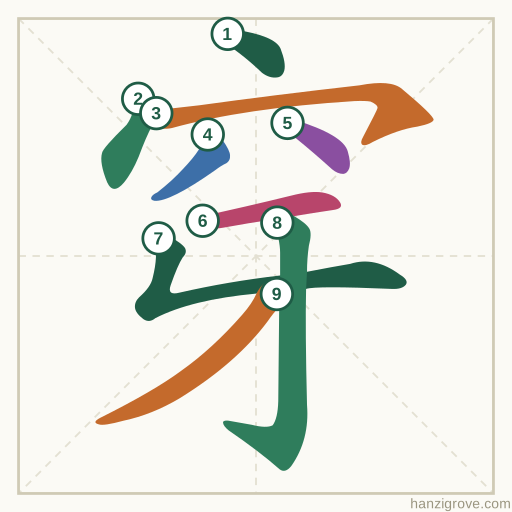
穿 (chuān) means “to wear”. It is made of 穴 + 牙 and has 9 strokes, and is an HSK 1 word in the current exam syllabus (2025).
Break 穿 into its parts
What 穿 is made of
- 穴 xué — cave
- 宀 — roof
- 丶 — dot
- 冖 mì — cover
- 八 bā — eight
- 宀 — roof
- 牙 yá — tooth
Origin hint: 牙 gives the meaning, 穴 gives the sound. (from the Make Me a Hanzi dataset; treat as a memory aid where history is uncertain)
穿 stroke order
Example sentences
今天很冷,多穿点儿衣服。Jīntiān hěn lěng, duō chuān diǎnr yīfu.It's cold today, so wear more clothes.
你穿这个很好看。Nǐ chuān zhège hěn hǎokàn.You look nice in this.
Words with 穿
Also built with 穴
- 帘liánthe flag-sign of a tavern
- 究jiūto dig into
- 穷qióngpoor
- 空kōngempty
- 突tūsudden
- 窃qièto steal
- 窄zhǎinarrow
- 窍qiàohole
- 窗chuāngwindow
- 窜cuànto flee
- 窝wōnest
Quick facts
| Pinyin | chuān |
|---|---|
| Meaning | to wear; to put on |
| Strokes | 9 |
| Radical | 穴 (cave, #116) |
| Pattern | Top–bottom |
| HSK | HSK 1 (exam 2025) · HSK 1 (2021) · Old HSK 2 |
Questions about 穿
What does 穿 mean?
穿 (chuān) means “to wear; to put on”.
How many strokes does 穿 have?
穿 has 9 strokes.
What is the radical of 穿?
The radical of 穿 is 穴 (xué, “cave”), Kangxi radical number 116.
What parts make up 穿?
穿 is made of 穴 (cave) and 牙 (tooth).
Which HSK level is 穿?
穿 is in HSK 1 (exam 2025) and HSK 1 (2021) and Old HSK 2.
Learn 穿 with its group
It is part of HSK 1 (2021) · Group 12: a short group with quick checks and spaced repeats.