
窜
窜 (cuàn) means “to flee”. It is made of 穴 + 串 and has 12 strokes, and is an old HSK 6 word (HSK 2.0).
Break 窜 into its parts
What 窜 is made of
- 穴 xué — cave
- 宀 — roof
- 丶 — dot
- 冖 mì — cover
- 八 bā — eight
- 宀 — roof
- 串 chuàn — string
- 口 kǒu — mouth
- 冂 — frame
- 一 — horizontal stroke
- 口 kǒu — mouth
- 冂 — frame
- 一 — horizontal stroke
- 丨 — vertical stroke
- 口 kǒu — mouth
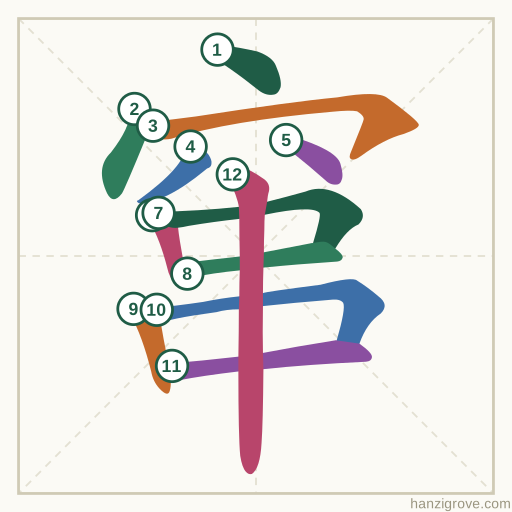
窜 stroke order
Example sentences
一只老鼠从洞里窜了出来。Yī zhī lǎoshǔ cóng dòng lǐ cuàn le chūlai.A mouse scurried out of the hole.
小猫一下子窜到了树上。Xiǎo māo yīxiàzi cuàn dào le shùshàng.The kitten shot up the tree.
Also built with 穴
- 帘liánthe flag-sign of a tavern
- 究jiūto dig into
- 穷qióngpoor
- 空kōngempty
- 穿chuānto wear
- 突tūsudden
- 窃qièto steal
- 窄zhǎinarrow
- 窍qiàohole
- 窗chuāngwindow
- 窝wōnest
Quick facts
| Pinyin | cuàn |
|---|---|
| Meaning | to flee; to scurry |
| Strokes | 12 |
| Pattern | Top–bottom |
| HSK | Old HSK 6 |
Questions about 窜
What does 窜 mean?
窜 (cuàn) means “to flee; to scurry”.
How many strokes does 窜 have?
窜 has 12 strokes.
What parts make up 窜?
窜 is made of 穴 (cave) and 串 (string).
Which HSK level is 窜?
窜 is in Old HSK 6.
Learn 窜 with its group
It is part of Old HSK 6 · Group 35: a short group with quick checks and spaced repeats.