
踩
踩 (cǎi) means “to step on”. It is made of 足 + 采 and has 15 strokes, and is an old HSK 5 word (HSK 2.0).
Break 踩 into its parts
What 踩 is made of
- 足 zú — foot
- 口 kǒu — mouth
- 冂 — frame
- 一 — horizontal stroke
- 口 kǒu — mouth
- 采 cǎi — to collect
- 爫 zhǎo — claws
- 木 mù — tree
- 十 — ten
- 八 bā — eight
踩 stroke order
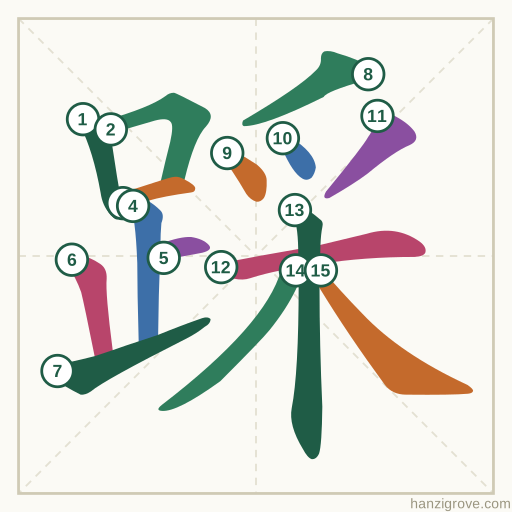
Example sentences
对不起,我踩到你的脚了。Duìbuqǐ, wǒ cǎi dào nǐ de jiǎo le.Sorry, I stepped on your foot.
请不要踩草地。Qǐng búyào cǎi cǎodì.Please don't walk on the grass.
Also built with 足
- 促cùto urge
- 捉zhuōto clutch
- 趴pāto lie on one's stomach
- 跃yuèto skip
- 跌diēto fall
- 跑pǎoto run
- 距jùdistance
- 跟gēnwith
- 跨kuàto step across
- 跪guìto kneel
- 路lùroad
- 跳tiàoto jump
Quick facts
| Pinyin | cǎi |
|---|---|
| Meaning | to step on; to tread on |
| Strokes | 15 |
| Pattern | Left–right |
| HSK | Old HSK 5 |
Questions about 踩
What does 踩 mean?
踩 (cǎi) means “to step on; to tread on”.
How many strokes does 踩 have?
踩 has 15 strokes.
What parts make up 踩?
踩 is made of 足 (foot) and 采 (to collect).
Which HSK level is 踩?
踩 is in Old HSK 5.
Learn 踩 with its group
It is part of Old HSK 5 · Group 8: a short group with quick checks and spaced repeats.