
蹦
蹦 (bèng) means “to jump”. It is made of 足 + 崩 and has 18 strokes, and is an old HSK 6 word (HSK 2.0).
Break 蹦 into its parts
What 蹦 is made of
- 足 zú — foot
- 口 kǒu — mouth
- 冂 — frame
- 一 — horizontal stroke
- 口 kǒu — mouth
- 崩 bēng — to rupture
- 山 shān — mountain
- 凵 qiǎn — container
- 丨 — vertical stroke
- 朋 péng — friend
- 月 yuè — moon; month
- 月 yuè — moon; month
- 山 shān — mountain
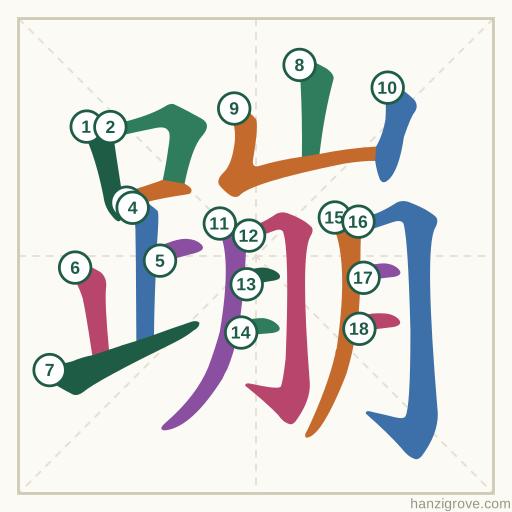
蹦 stroke order
Example sentences
孩子高兴得蹦了起来。Háizi gāoxìng de bèng le qǐlai.The child jumped up with joy.
小兔子在草地上蹦来蹦去。Xiǎo tùzi zài cǎodì shàng bèng lái bèng qù.The little rabbit hopped around on the grass.
Also built with 足
- 促cùto urge
- 捉zhuōto clutch
- 趴pāto lie on one's stomach
- 跃yuèto skip
- 跌diēto fall
- 跑pǎoto run
- 距jùdistance
- 跟gēnwith
- 跨kuàto step across
- 跪guìto kneel
- 路lùroad
- 跳tiàoto jump
Quick facts
| Pinyin | bèng |
|---|---|
| Meaning | to jump; to hop; to bounce |
| Strokes | 18 |
| Pattern | Left–right |
| HSK | Old HSK 6 |
Questions about 蹦
What does 蹦 mean?
蹦 (bèng) means “to jump; to hop; to bounce”.
How many strokes does 蹦 have?
蹦 has 18 strokes.
What parts make up 蹦?
蹦 is made of 足 (foot) and 崩 (to rupture).
Which HSK level is 蹦?
蹦 is in Old HSK 6.
Learn 蹦 with its group
It is part of Old HSK 6 · Group 10: a short group with quick checks and spaced repeats.