
蹲
蹲 (dūn) means “to squat”. It is made of 足 + 尊 and has 19 strokes, and is an old HSK 5 word (HSK 2.0).
Break 蹲 into its parts
What 蹲 is made of
- 足 zú — foot
- 口 kǒu — mouth
- 冂 — frame
- 一 — horizontal stroke
- 口 kǒu — mouth
- 尊 zūn — to honor
- 酋 qiú — chief of tribe
- 丷 ha — kwukyel
- 酉 yǒu — wine
- 寸 cùn — inch
- 酋 qiú — chief of tribe
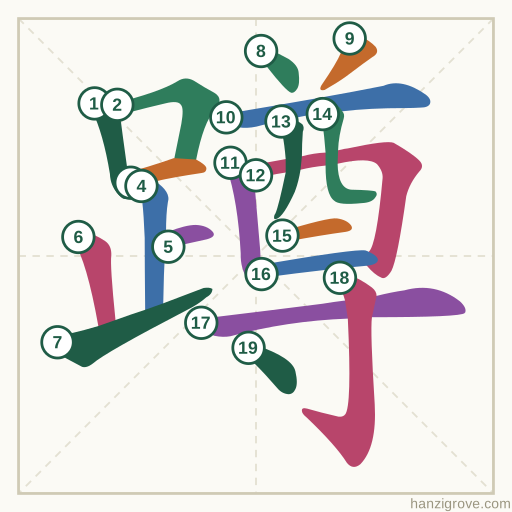
蹲 stroke order
Example sentences
他蹲在地上系鞋带。Tā dūn zài dìshang jì xiédài.He crouched down to tie his shoelaces.
小狗蹲在门口等主人。Xiǎo gǒu dūn zài ménkǒu děng zhǔrén.The puppy is crouching at the door waiting for its owner.
Also built with 足
- 促cùto urge
- 捉zhuōto clutch
- 趴pāto lie on one's stomach
- 跃yuèto skip
- 跌diēto fall
- 跑pǎoto run
- 距jùdistance
- 跟gēnwith
- 跨kuàto step across
- 跪guìto kneel
- 路lùroad
- 跳tiàoto jump
Quick facts
| Pinyin | dūn |
|---|---|
| Meaning | to squat; to crouch |
| Strokes | 19 |
| Pattern | Left–right |
| HSK | Old HSK 5 |
Questions about 蹲
What does 蹲 mean?
蹲 (dūn) means “to squat; to crouch”.
How many strokes does 蹲 have?
蹲 has 19 strokes.
What parts make up 蹲?
蹲 is made of 足 (foot) and 尊 (to honor).
Which HSK level is 蹲?
蹲 is in Old HSK 5.
Learn 蹲 with its group
It is part of Old HSK 5 · Group 25: a short group with quick checks and spaced repeats.