
Chinese character for autumn (fall): 秋 (qiū)
The Chinese character for autumn is 秋 (qiū). It means autumn or fall and appears in 秋天 (qiūtiān, autumn) and 中秋节 (Mid-Autumn Festival). It is the harvest season.
How 秋 is built
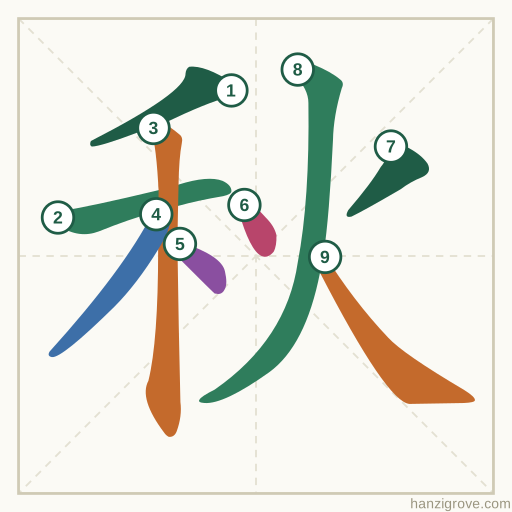
秋 joins 禾 (hé, grain) with 火 (huǒ, fire). A standard explanation is that autumn is when grain ripens and turns golden like fire, or when farmers burned the stubble after the harvest. As a memory aid, think of grain and fire: the harvest season. It is identical in simplified and traditional Chinese.
秋 qiū · autumn
- 禾hé — cereal
- 丿 — falling stroke
- 木mù — tree
- 十 — ten
- 八bā — eight
- 火huǒ — fire
- 丷ha — kwukyel
- 丶 — dot
- 人rén — person
- 丷ha — kwukyel
Origin hint: The time of year when farmers would burn 禾 crops 火 (from the Make Me a Hanzi dataset; treat as a memory aid where history is uncertain)
How 秋 is used
Before you use it as a tattoo or design: 秋 is identical in both scripts; in poetry autumn can suggest melancholy, which some readers may sense.
Questions
What is the Chinese character for autumn (fall)?
秋 (qiū) means “autumn”.
How do you pronounce 秋?
秋 is pronounced qiū.