
Chinese character for winter: 冬 (dōng)
The Chinese character for winter is 冬 (dōng). It means winter and appears in 冬天 (dōngtiān, winter) and 冬至 (dōngzhì, winter solstice). It is the season of rest in Chinese tradition.
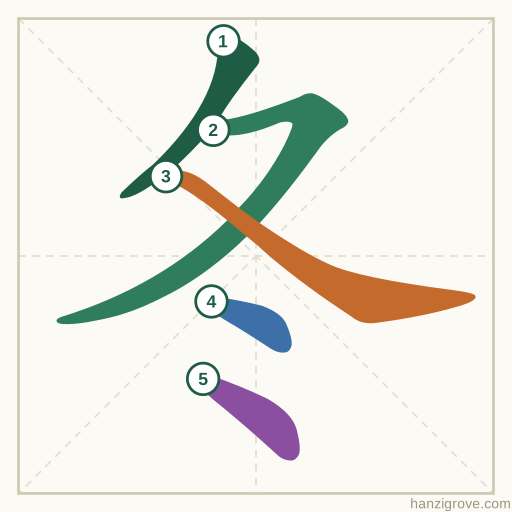
How 冬 is built
冬 has 夂 on top, a foot or the end of something, and two dots ⺀ at the bottom, which represent ice. As a memory aid, picture feet walking carefully over ice, or the year coming to its end in the frozen season. The two-dot ice part also appears in 冰 (ice) and 冷 (cold). 冬 is identical in simplified and traditional Chinese.
冬 dōng · winter
- 夂zhǐ — to go
- 丿 — falling stroke
- 又yòu — (once) again
- ⺀ — ice
Origin hint: A man walking 夂 on ice ⺀ (from the Make Me a Hanzi dataset; treat as a memory aid where history is uncertain)
How 冬 is used
Before you use it as a tattoo or design: 冬 is identical in both scripts; the two dots at the bottom should be clear and slanted, not merged.
Questions
What is the Chinese character for winter?
冬 (dōng) means “winter”.
How do you pronounce 冬?
冬 is pronounced dōng.