
Chinese character for courage: 勇 (yǒng)
The Chinese character for courage is 勇 (yǒng). It means brave or courageous and is the core of 勇气 (yǒngqì, courage) and 勇敢 (yǒnggǎn, brave). It is a classic virtue in Chinese culture.
How 勇 is built
勇 has 甬 (yǒng) on top, which gives the sound, and 力 (lì, strength) at the bottom, which gives the meaning. So courage is a kind of strength. As a memory aid, think of the top part as a bell or a tall passage and the bottom as muscle: strength that stands tall in the face of danger. The character is the same in simplified and traditional Chinese.
勇 yǒng · brave
- 甬yǒng — path
- 用yòng — to use
- 冂 — frame
- 用yòng — to use
- 力lì — strength
- 丿 — falling stroke
Origin hint: 力 gives the meaning, 甬 gives the sound. (from the Make Me a Hanzi dataset; treat as a memory aid where history is uncertain)
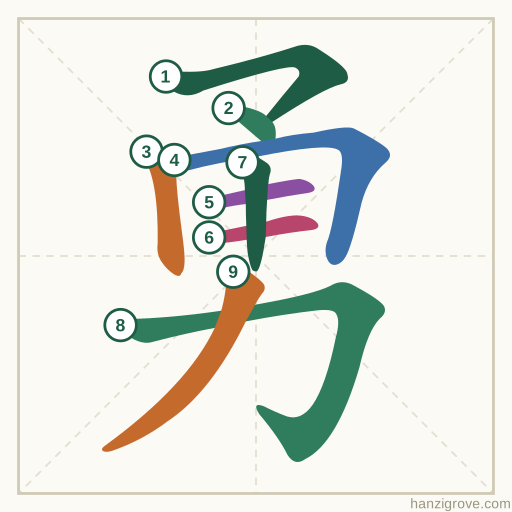
How 勇 is used
Other ways to say courage
- 勇气 yǒngqì — courage as a noun, the most natural word
- 勇敢 yǒnggǎn — brave, an adjective
Before you use it as a tattoo or design: 勇 is identical in both scripts and reads as 'brave/courage'; 勇气 is the full noun if you want no ambiguity.
Questions
What is the Chinese character for courage?
勇 (yǒng) means “brave”.
How do you pronounce 勇?
勇 is pronounced yǒng.