
Chinese character for strength: 力 (lì)
The Chinese character for strength is 力 (lì). It means strength, power or force, and appears in 力量 (lìliang, strength) and 努力 (nǔlì, effort). It is also the usual answer for 'power' in Chinese.
How 力 is built
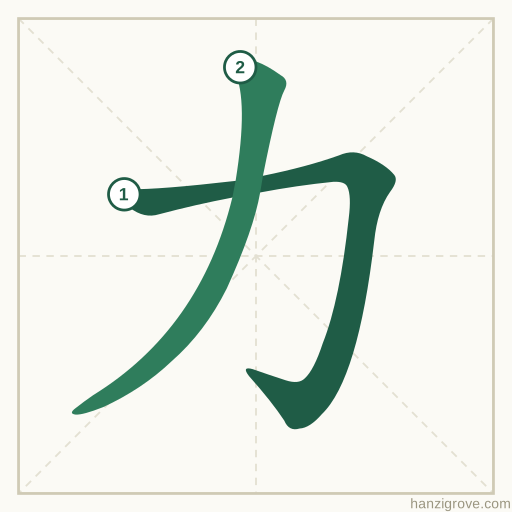
力 is a pictograph that is usually explained as an ancient plough, the tool farmers pushed with their strength; some see a flexed arm. Either way, the picture is of physical effort. 力 also appears as a part in many characters about effort and work, such as 男 (man: field 田 plus strength 力), 勇 (brave) and 功 (achievement). It is written the same in simplified and traditional Chinese, with just two strokes.
力 lì · strength
- 丿 — falling stroke
Origin hint: A plow's head representing strength (from the Make Me a Hanzi dataset; treat as a memory aid where history is uncertain)
How 力 is used
Other ways to say strength
- 力量 lìliang — two-character word for strength, inner or physical
- 强 qiáng — strong, powerful (an adjective)
Before you use it as a tattoo or design: 力 is simple and identical in both scripts, so focus on a good brush font; 力量 reads more clearly as 'strength' on its own.
Questions
What is the Chinese character for strength?
力 (lì) means “strength”.
How do you pronounce 力?
力 is pronounced lì.