
Chinese character for energy (qi): 气 (qì)
The Chinese character for energy in the sense of qi is 气 (qì). It means air, breath and the vital energy central to Chinese medicine and martial arts, as in 气功 (qìgōng). In everyday speech it also means gas or anger.
How 气 is built
The simplified 气 is a picture of vapor or clouds drifting in layers. The traditional form 氣 adds 米 (mǐ, rice) inside, which is explained as steam rising from cooking rice, the energy that food gives. Both pictures show something invisible that rises and moves, the core idea of qi. 气 appears in many words, from 天气 (weather) to 生气 (to get angry).
气 qì · air
- 亻rén — person
Origin hint: A person 亻 breathing air (from the Make Me a Hanzi dataset; treat as a memory aid where history is uncertain)
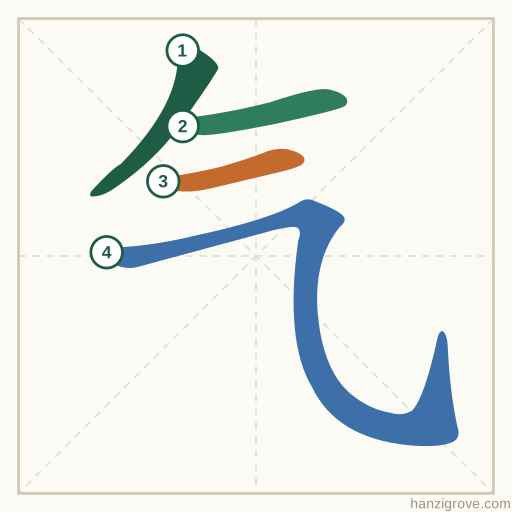
How 气 is used
Other ways to say energy (qi)
- 能量 néngliàng — energy in the scientific or everyday sense
Before you use it as a tattoo or design: Alone 气 can read as 'air' or 'anger', so the traditional 氣, which is more common in martial arts contexts, is a popular choice.
Questions
What is the Chinese character for energy (qi)?
气 (qì) means “qi”. In traditional characters it is written 氣.
How do you pronounce 气?
气 is pronounced qì.
Is 气 simplified or traditional?
气 is the simplified form used in mainland China and Singapore; 氣 is the traditional form used in Taiwan and Hong Kong.