
Chinese character for filial piety: 孝 (xiào)
The Chinese character for filial piety is 孝 (xiào). It means devotion and respect toward one's parents and elders, a core value in Chinese culture. It appears in 孝顺 (xiàoshùn, dutiful to parents).
How 孝 is built
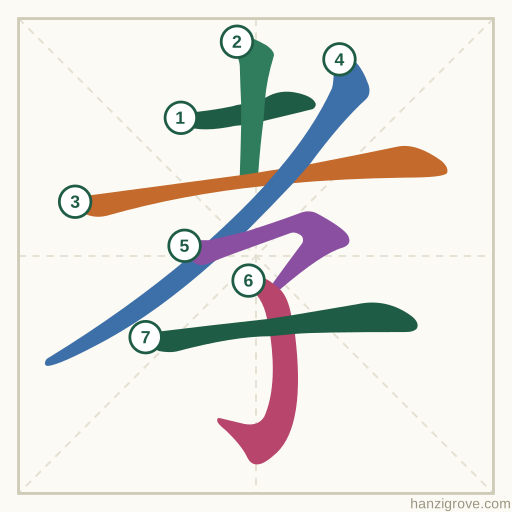
孝 is a clear picture. The top part 耂 is a shortened form of 老 (lǎo, old), an old person with long hair. Underneath is 子 (zǐ, child). The child supports the old person from below, which is exactly the idea of caring for one's parents. This is a standard explanation found in classic dictionaries. 孝 is written the same in simplified and traditional Chinese.
孝 xiào · filial piety
- 耂lǎo — old
- 土tǔ — earth
- 十 — ten
- 一 — horizontal stroke
- 丿 — falling stroke
- 土tǔ — earth
- 子zǐ — child
- 了liǎo / le — finish
- 乛 — bent stroke
- 亅 — hook
- 一 — horizontal stroke
- 了liǎo / le — finish
How 孝 is used
Before you use it as a tattoo or design: 孝 is identical in both scripts and its meaning is clear to Chinese readers; make sure 耂 and 子 are joined as one character.
Questions
What is the Chinese character for filial piety?
孝 (xiào) means “filial piety”.
How do you pronounce 孝?
孝 is pronounced xiào.