
Chinese character for peace: 和平 (hépíng)
The Chinese word for peace is 和平 (hépíng). 和 means harmony and 平 means level or calm, so together they mean peace, especially peace between people and nations. For inner peace, Chinese often uses 平安 or 安宁 instead.
How 和平 is built
和 (hé) joins 禾 (hé, a stalk of grain), which also gives the sound, with 口 (kǒu, mouth). As a memory aid, when every mouth has grain, there is harmony. 平 (píng) shows something flat and level, often explained as a balanced scale. Put together, 和平 is harmony that has become level and settled: peace. Both characters are the same in simplified and traditional Chinese.
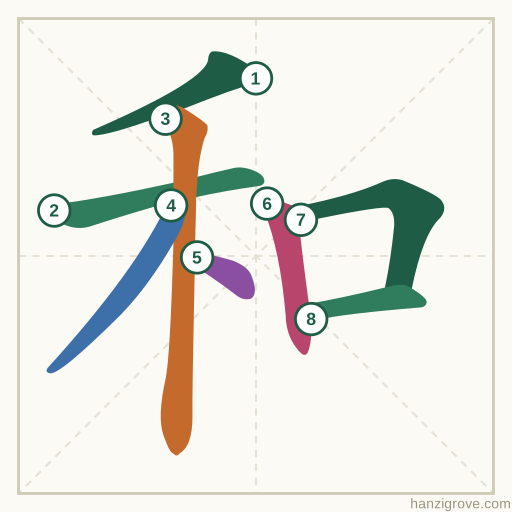
和 hé · and
- 禾hé — cereal
- 丿 — falling stroke
- 木mù — tree
- 十 — ten
- 八bā — eight
- 口kǒu — mouth
- 冂 — frame
- 丨 — vertical stroke
- 一 — horizontal stroke
- 冂 — frame
Origin hint: 口 gives the meaning, 禾 gives the sound. (from the Make Me a Hanzi dataset; treat as a memory aid where history is uncertain)
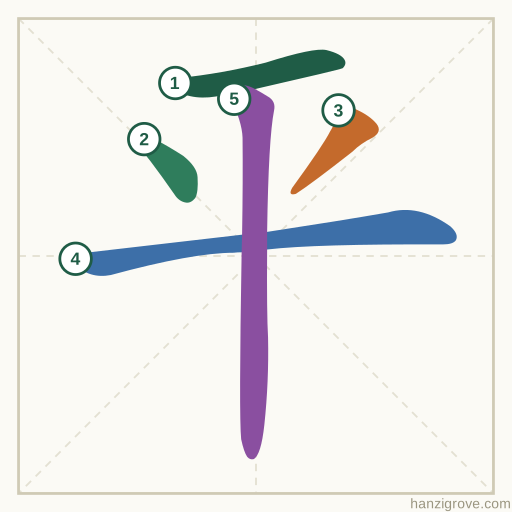
平 píng · flat
- 干gàn — dry (gān)
- 一 — horizontal stroke
- 十 — ten
- 一 — horizontal stroke
- 丨 — vertical stroke
- 丷ha — kwukyel
- 丶 — dot
Origin hint: A leveling scale (from the Make Me a Hanzi dataset; treat as a memory aid where history is uncertain)
How 和平 is used
Other ways to say peace
- 平安 píng'ān — safe and sound; peace in daily life, common in blessings
- 安 ān — single character for peace and safety
Before you use it as a tattoo or design: Choose 和平 for peace between people, or 平安 for personal safety and wellbeing; the two are not interchangeable.
Questions
What is the Chinese character for peace?
和平 (hépíng) means “peace (absence of war)”.
How do you pronounce 和平?
和平 is pronounced hépíng.