
Chinese character for harmony: 和 (hé)
The Chinese character for harmony is 和 (hé). It means harmony, peace and gentleness, and in everyday speech it also means 'and' or 'with'. It appears in words like 和谐 (héxié, harmony) and 和平 (hépíng, peace).
How 和 is built
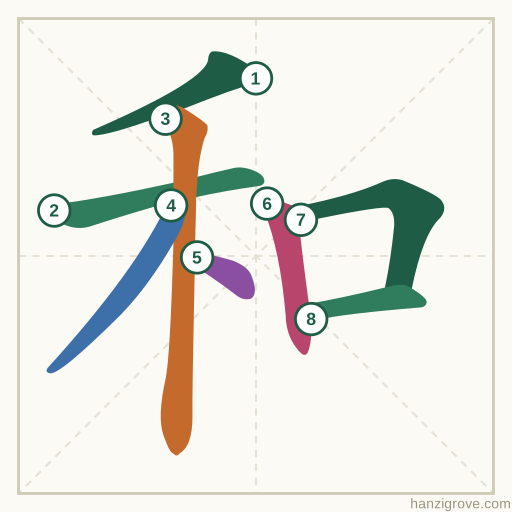
和 combines 禾 (hé), a stalk of ripe grain, with 口 (kǒu), a mouth. 禾 also supplies the sound hé. As a memory aid, think of harmony as a time when every mouth has grain to eat, so there is nothing to fight over. The character is a core idea in Chinese culture, appearing in sayings like 和为贵 (harmony is most precious). It is written identically in simplified and traditional Chinese.
和 hé · and
- 禾hé — cereal
- 丿 — falling stroke
- 木mù — tree
- 十 — ten
- 八bā — eight
- 口kǒu — mouth
- 冂 — frame
- 丨 — vertical stroke
- 一 — horizontal stroke
- 冂 — frame
Origin hint: 口 gives the meaning, 禾 gives the sound. (from the Make Me a Hanzi dataset; treat as a memory aid where history is uncertain)
How 和 is used
Other ways to say harmony
- 和谐 héxié — two-character word for harmony, as in a harmonious relationship
Before you use it as a tattoo or design: 和 alone is understood as harmony but also means 'and', so many people pick 和谐 or the saying 和为贵 for clearer meaning.
Questions
What is the Chinese character for harmony?
和 (hé) means “harmony”.
How do you pronounce 和?
和 is pronounced hé.