
行
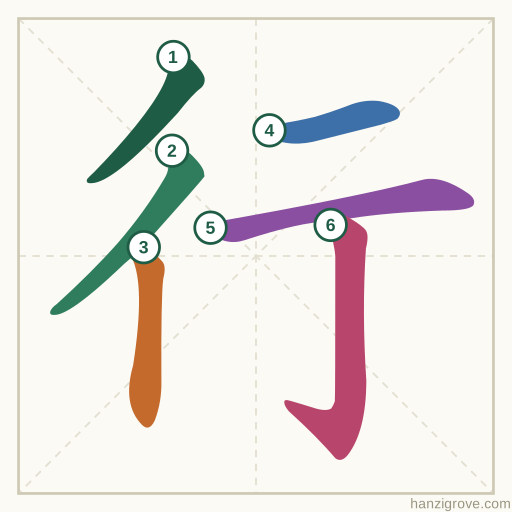
行 (xíng) means “OK”. It is made of 彳 + 亍 and has 6 strokes, and is an HSK 3 word in the current exam syllabus (2025).
Break 行 into its parts
What 行 is made of
- 彳 chì — to step with the left foot
- 丨 — vertical stroke
- 亍 chù — to take small steps
- 一 — horizontal stroke
- 丁 dīng — male adult
Origin hint: To take small steps 亍 with one's feet 彳 (from the Make Me a Hanzi dataset; treat as a memory aid where history is uncertain)
行 stroke order
Example sentences
明天去,行吗?Míngtiān qù, xíng ma?Is going tomorrow OK?
行,我们走吧。Xíng, wǒmen zǒu ba.OK, let's go.
Words with 行
- 不行bùxíngnot OK
- 进行jìnxíngto carry out
- 举行jǔxíngto hold (a meeting, event etc.)
- 流行liúxíngpopular
- 旅行lǚxíngto travel
- 行动xíngdòngaction
- 行人xíngrénpedestrian
- 行为xíngwéibehavior
- 银行yínhángbank
- 银行卡yínhángkǎbank card
- 自行车zìxíngchēbicycle
- 飞行fēixíngto fly
- 旅行社lǚxíngshètravel agency
- 实行shíxíngto carry out
- 行李xíngliluggage
- 步行bùxíngto walk
- 行业hángyèindustry
- 行李箱xínglixiāngsuitcase
- 发行fāxíngto issue
- 行列hánglièranks
- 航行hángxíngto sail
- 可行kěxíngfeasible
- 履行lǚxíngto fulfill
- 逆行nìxíngto go the wrong way (traffic)
- 平行píngxíngparallel
- 盛行shèngxíngto be popular
- 外行wàihánglayman
- 行政xíngzhèngadministration
- 运行yùnxíngto run
- 执行zhíxíngto carry out
- 出行chūxíngto travel
Also built with 彳
- 役yìservant
- 彻chèpenetrating
- 彼bǐthat
- 往wǎngtowards
- 征zhēngto summon
- 径jìngpath
- 待dāito stay
- 很hěnvery
- 徊huáito linger
- 律lǜstatute
- 徒túdisciple
- 得déto get
Quick facts
| Pinyin | xíng |
|---|---|
| Meaning | OK; to work |
| Strokes | 6 |
| Radical | 行 (walk enclosure, #144) |
| Pattern | Left–right |
| HSK | HSK 3 (exam 2025) · HSK 1 (2021) · Old HSK 4 |
Questions about 行
What does 行 mean?
行 (xíng) means “OK; to work”.
How many strokes does 行 have?
行 has 6 strokes.
What is the radical of 行?
The radical of 行 is 行 (xíng, “walk enclosure”), Kangxi radical number 144.
What parts make up 行?
行 is made of 彳 (to step with the left foot) and 亍 (to take small steps).
Which HSK level is 行?
行 is in HSK 3 (exam 2025) and HSK 1 (2021) and Old HSK 4.
Learn 行 with its group
It is part of HSK 1 (2021) · Group 26: a short group with quick checks and spaced repeats.