
Chinese character for man: 男 (nán)
The Chinese character for man is 男 (nán). It means male or man and appears in 男人 (nánrén, man) and 男孩 (nánhái, boy). It is often seen on restroom doors.
How 男 is built
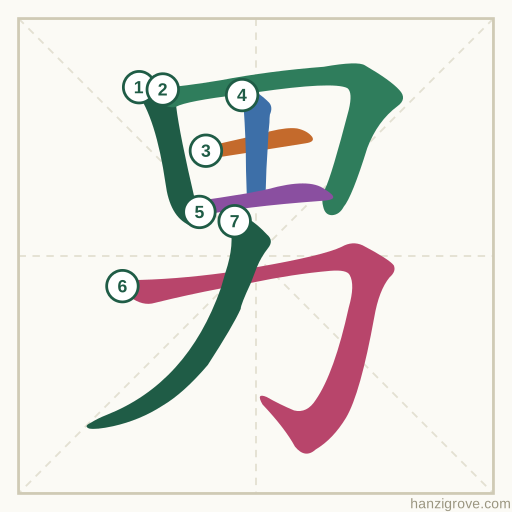
男 has 田 (tián, a field) on top and 力 (lì, strength, or a plough) at the bottom. The classic explanation is that a man was the one who used his strength to work the fields. This is one of the best-known compound characters for learners. It is identical in simplified and traditional Chinese.
男 nán · male
- 田tián — field
- 冂 — frame
- 丨 — vertical stroke
- 土tǔ — earth
- 十 — ten
- 一 — horizontal stroke
- 冂 — frame
- 力lì — strength
- 丿 — falling stroke
Origin hint: Someone who can work 力 the farm 田 (from the Make Me a Hanzi dataset; treat as a memory aid where history is uncertain)
How 男 is used
Before you use it as a tattoo or design: 男 alone reads like a restroom sign meaning 'male', so it is rarely chosen as a tattoo on its own.
Questions
What is the Chinese character for man?
男 (nán) means “man”.
How do you pronounce 男?
男 is pronounced nán.