
Chinese character for wish: 愿 (yuàn)
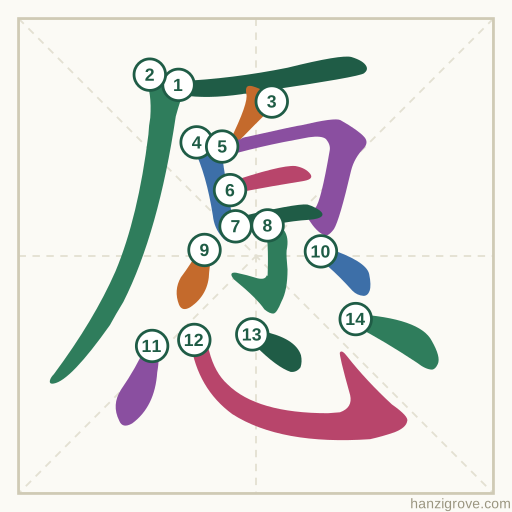
The Chinese character for wish is 愿 (yuàn). It means a wish or desire and to be willing, as in 愿望 (yuànwàng, wish) and 心愿 (xīnyuàn, heart's wish). It is also used to say 'may...', as in 愿你幸福 (may you be happy).
How 愿 is built
The simplified 愿 has 原 (yuán, source, origin) on top, which gives the sound, and 心 (xīn, heart) below. As a memory aid, a wish comes from the source of your heart. The traditional form 願 is built differently, with 原 on the left and 頁 (yè, head) on the right. Both are read yuàn and mean the same thing.
愿 yuàn · desire
- 原yuán — source
- 厂chǎng — cliff
- 泉quán — spring
- 心xīn — heart
Origin hint: 心 gives the meaning, 原 gives the sound. (from the Make Me a Hanzi dataset; treat as a memory aid where history is uncertain)
How 愿 is used
Other ways to say wish
- 愿望 yuànwàng — a wish, the everyday noun
- 祝 zhù — to wish someone well, as in 祝你好运
Before you use it as a tattoo or design: Simplified 愿 and traditional 願 look different, so pick one; 心愿 (heart's wish) is a natural two-character choice.
Questions
What is the Chinese character for wish?
愿 (yuàn) means “wish”. In traditional characters it is written 願.
How do you pronounce 愿?
愿 is pronounced yuàn.
Is 愿 simplified or traditional?
愿 is the simplified form used in mainland China and Singapore; 願 is the traditional form used in Taiwan and Hong Kong.