
童
童 (tóng) · child
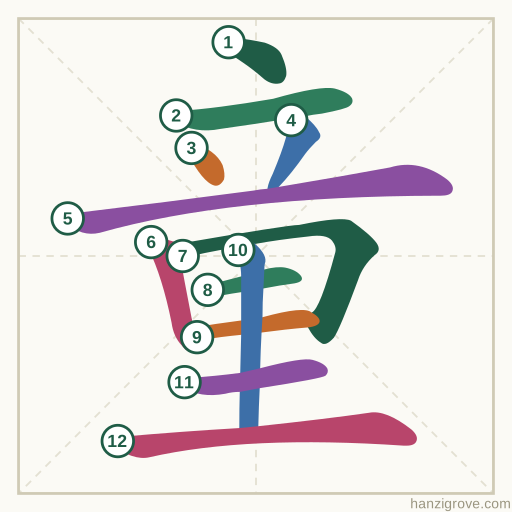
童 (tóng) means “child”. It is made of 立 + 里 and has 12 strokes.
Break 童 into its parts
What 童 is made of
- 立 lì — to stand
- 亠 tóu — lid
- 丶 — dot
- 一 — horizontal stroke
- 丷 ha — kwukyel
- 丶 — dot
- 一 — horizontal stroke
- 亠 tóu — lid
- 里 lǐ — unit of distance equal to 0.5km
- 田 tián — field
- 土 tǔ — earth
- 十 — ten
- 一 — horizontal stroke
Origin hint: A child standing 立 in the village 里 (from the Make Me a Hanzi dataset; treat as a memory aid where history is uncertain)
童 stroke order
Example sentences with 儿童
这家书店有很多儿童书。Zhè jiā shūdiàn yǒu hěn duō értóng shū.This bookshop has lots of children's books.
儿童节是哪一天?Értóng Jié shì nǎ yī tiān?Which day is Children's Day?
Words with 童
Also built with 立
- 亲qīnone's own (blood relation)
- 位wèimeasure word for people (polite)
- 垃lāgarbage
- 帝dìsupreme ruler
- 拉lāto pull
- 旁pángside
- 泣qìto cry
- 竖shùto stand upright
- 站zhànstation
- 竞jìngto compete
- 竭jiéto exhaust
- 端duānto carry (level with both hands)
Quick facts
| Pinyin | tóng |
|---|---|
| Meaning | child |
| Strokes | 12 |
| Radical | 立 (stand, #117) |
| Pattern | Top–bottom |
Questions about 童
What does 童 mean?
童 (tóng) means “child”.
How many strokes does 童 have?
童 has 12 strokes.
What is the radical of 童?
The radical of 童 is 立 (lì, “stand”), Kangxi radical number 117.
What parts make up 童?
童 is made of 立 (to stand) and 里 (unit of distance equal to 0.5km).
Keep learning
Start with HSK 1 · Group 1: 10 words with quick checks and spaced repeats.