
端
端 (duān) means “to carry (level with both hands)”. It is made of 立 + 耑 and has 14 strokes, and is an old HSK 6 word (HSK 2.0).
Break 端 into its parts
What 端 is made of
- 立 lì — to stand
- 亠 tóu — lid
- 丶 — dot
- 一 — horizontal stroke
- 丷 ha — kwukyel
- 丶 — dot
- 一 — horizontal stroke
- 亠 tóu — lid
- 耑 duān — specialized
- 山 shān — mountain
- 凵 qiǎn — container
- 丨 — vertical stroke
- 而 ér — and
- 山 shān — mountain
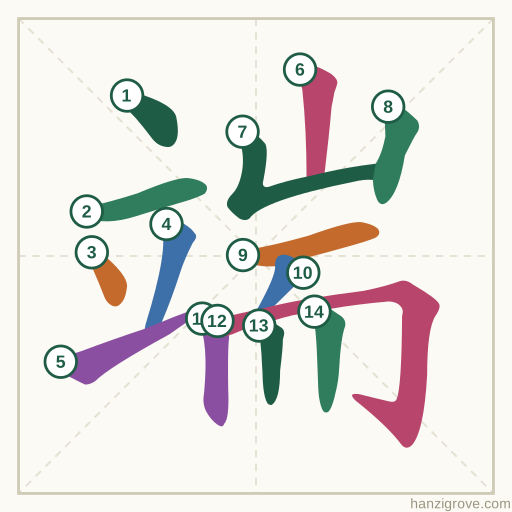
端 stroke order
Example sentences
服务员端来了一盘菜。Fúwùyuán duān lái le yī pán cài.The waiter brought over a plate of food.
他端着一杯热茶走进来。Tā duān zhe yī bēi rèchá zǒu jìnlai.He came in carrying a cup of hot tea.
Words with 端
- 弊端bìduānabuse
- 端午节DuānwǔjiéDragon Boat Festival
- 端正duānzhèngupright
- 极端jíduānextreme
- 尖端jiānduāncutting-edge
- 争端zhēngduāndispute
Also built with 立
- 亲qīnone's own (blood relation)
- 位wèimeasure word for people (polite)
- 垃lāgarbage
- 帝dìsupreme ruler
- 拉lāto pull
- 旁pángside
- 泣qìto cry
- 竖shùto stand upright
- 站zhànstation
- 竞jìngto compete
- 童tóngchild
- 竭jiéto exhaust
Quick facts
| Pinyin | duān |
|---|---|
| Meaning | to carry (level with both hands); end |
| Strokes | 14 |
| Pattern | Left–right |
| HSK | Old HSK 6 |
Questions about 端
What does 端 mean?
端 (duān) means “to carry (level with both hands); end”.
How many strokes does 端 have?
端 has 14 strokes.
What parts make up 端?
端 is made of 立 (to stand) and 耑 (specialized).
Which HSK level is 端?
端 is in Old HSK 6.
Learn 端 with its group
It is part of Old HSK 6 · Group 47: a short group with quick checks and spaced repeats.